5 Things Cruise Lines Don’t Want Us To Know About Cruise Ship Food
 Cruise Ship Food: What They Don’t Want You To Know
Every cruise line loves to talk about their food. But after years of dining across 19 cruise lines from mega resort ships to ultra-luxury, I’ve discovered a lot of what they tell us about the food on board isn’t quite the full story.
I thought it was time to reveal five things cruise lines probably don’t want us thinking about too much when it comes to cruise line food – or they’d be talking about these topics a lot more.
Starting with just how little they spend to feed us.
The Surprising Reality of the Cruise Food Budget!
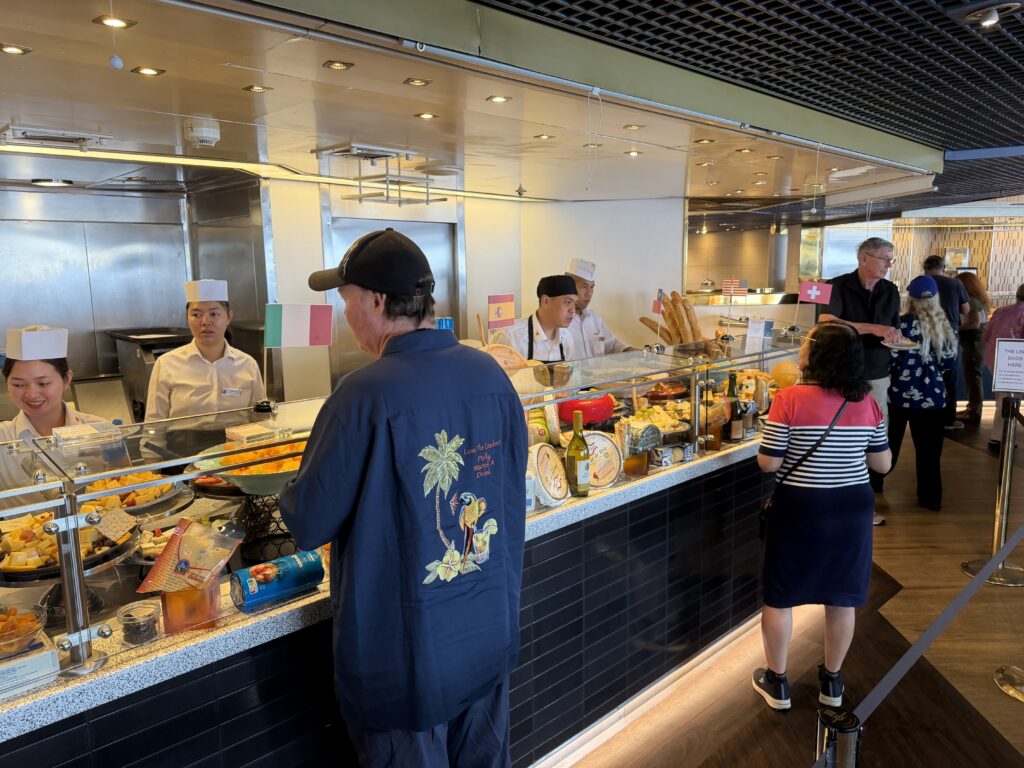
Most cruisers I meet assume with all the dining venues, including Main Dining Room, buffet, 24-hour room service, and afternoon tea, that cruise lines must be spending a big chunk of our cruise fare on food.
The reality is that per passenger per day, the food spend is incredibly small and cruise lines are constantly fighting to keep it low.
While cruise lines treat the food cost per passenger as commercially sensitive and usually don’t talk about it openly, I first got an insight on how low the budget is through Seatrade, the big cruise industry event, when the Vice President of Strategic Operations for Royal Caribbean revealed that they spend just $15 per passenger per day on food. So, about $5 per meal.
I’ve since done more investigation and here’s what I have been able to work out.
While value mass lines like Royal Caribbean, Carnival, MSC and Norwegian are spending around about $15 per day per passenger, premium lines like Holland America, Celebrity, and Princess seem to only be spending about $25 per day per passenger. That’s about $8 per meal. So, think about it. A starter, main course and dessert have just $8 spent on all three in total.
Ultra-luxury lines like Seabourn, Regent and Crystal are spending the most, as you would expect, but still, it is only around $18 per meal, so only about $55 per passenger per day.
The numbers are rather low.
For a week-long cruise on a large resort line like Royal Caribbean that means they’re only spending about $100 for the week for all your food. On an ultra-luxury line like Silversea, they could be spending just under $400 for all your food. Small percentages of our cruise fares.
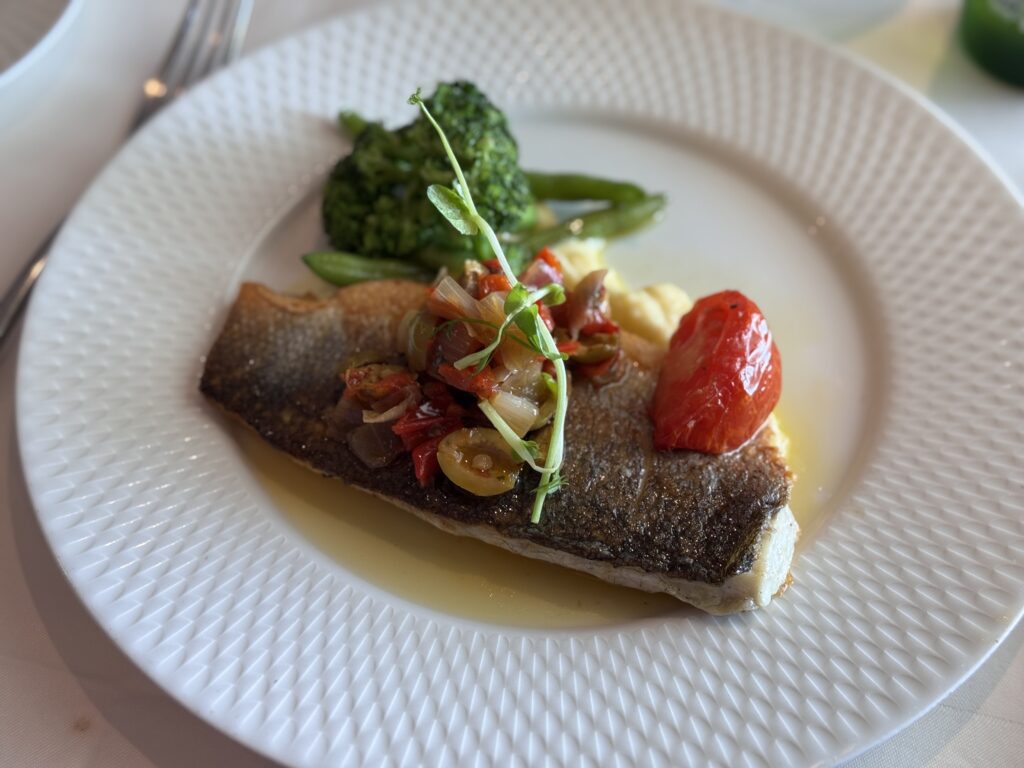
The question is how and why can they set it so low? I’m going to talk about what I discovered on this including how they design the menus, what they’re doing on board to aggressively keep down and control food costs, but first how they source food helps. This one is eye opening.
Your Food Doesn’t Come From Where You Think
Probably one of the most surprising things I discovered is just how far the food on board a ship travels and how most of the food we consume on a cruise ship comes from the United States no matter where in the world we are cruising.
Many cruisers assume because they are boarding in say in Italy, and see the ship being stocked with food items that it has come from the region and are shocked when they discover that it’s not the case.
For the best-known international lines, almost all the food is centrally sourced in the USA and shipped to the ships globally from there, regardless of where the ship is sailing. On average on most cruises at least 80% of what you’re consuming is going to have come from the United States.
There is some move towards starting more regional supply, but in reality, that is only in the Mediterranean, where it is reported that some global lines are closer to 50:50 USA to European supplied food items.
Today, shipped from the USA are things like frozen meat and poultry, frozen seafood, dry goods like flour, rice, pasta, canned goods, breakfast cereals, coffee and things like cooking oils.
Local and regional sourcing tends to be more for fresh seafood like Alaska Salmon, fresh fruit, vegetables, milk and some dairy products, and regional wines and beers if they are expected or pushed on board. Again, Alaska beers is a good example of this.
Why is this the case?
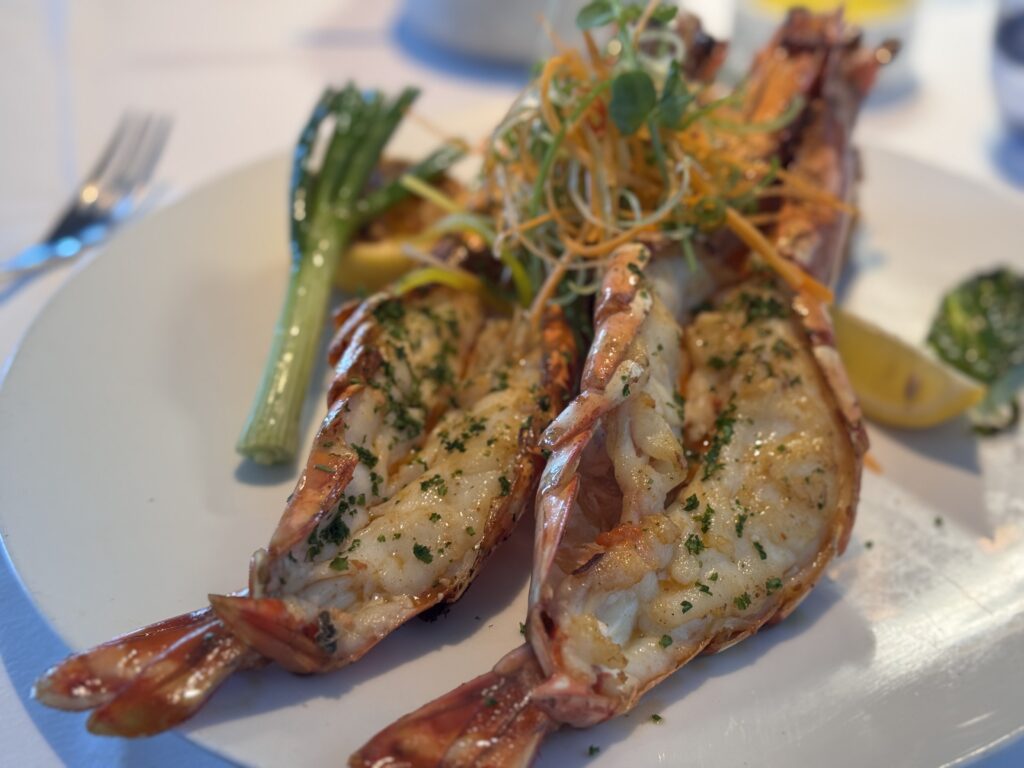
First, the volumes involved are enormous and buying centrally means huge price bargaining power to drive down costs to meet the tight food budgets I mentioned.
Second, lines need suppliers that can guarantee ability to deliver not only these huge volumes exactly when needed but also meet every time the quality specifications and the safety standards the line follows.
The main cruise line groups require their meat, poultry, dairy, grains and produce to meet the tough USDA (United States Department of Agriculture) rules. And, if the ship is going to be returning at some point to the USA, which almost all do, they must follow other rules set by the US Public Health Service.
Therefore, finding, managing and using local and regional suppliers is much more challenging.
The third reason cruise lines will source things out of the USA is because passengers expect brands they know and are familiar with.
Also, when we go on say a Princess Cruise sailing out of Miami, Barcelona, Tokyo, or even Cape Town, we expect the line to serve up a consistent quality, taste and dining experience on each one.
So, this sourcing approach means a cruise line can ensure a standardised quality and experience across the fleet.
This highly centralised approach and need for consistency also leads to another amazing revelation about cruise ship food that I found surprises cruisers. The reality of how the menus and dishes are chosen and why.
Executive Chef Has Little Control Over Your Menu
On board a lot of fuss is made about the Executive Chef, and they always get the loudest cheer from passengers when Senior Crew are introduced.
However, they have little influence on the menus and dishes we get to eat.
Decades ago, in the days of the great ocean liners, like on Cunard’s QE2, the Executive Chef would decide the menus and dishes , but now it’s highly structured, very regimented, controlled at Head Office with almost no flexibility on the ship.
Most cruisers wrongly assume the Executive Chef has been responsible for shaping what’s on their plates. The reality is menus are standardised, fleet-wide, set at corporate level, and the ship’s Executive Chef’s role is more about making sure the ship delivers what’s set by Head Office.
Menus are designed months and years ahead, by a Corporate culinary team under the guidance of the Vice President of Food and Beverage.
Their brief is to create menus with recipes that use as few ingredients as possible to keep costs and complexity down, can be made in volume, are simple to cook and prepare, and can be easily replicated on every ship in the fleet.
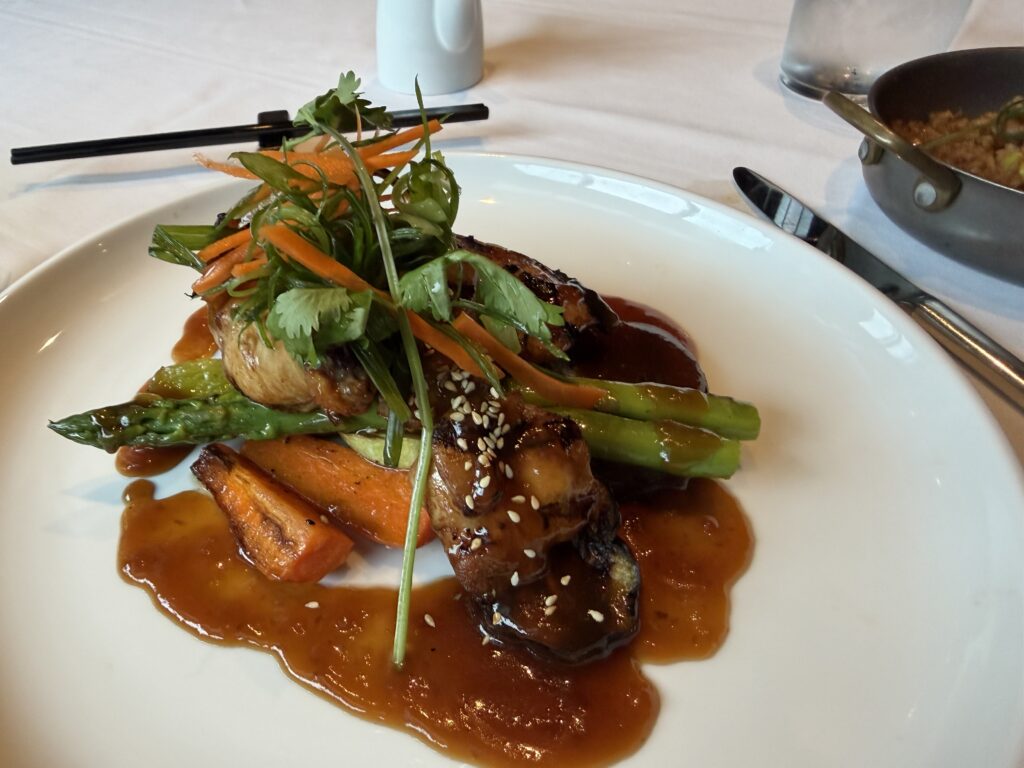
They also must meet that tight food budget I mentioned, and so they also set tightly defined portion sizes, and lay down exactly what the plate of food must have on it and look like when served. So, they include for example how many potatoes, meat portion size, how many vegetables, how much sauce, and even exactly how it should be laid out and presented.
The ships are given the recipes along with photographs of each dish when served that they must replicate. If you ever go on a behind-the-scenes tour in the galley, look out for the board full of pictures and recipes for every dish the ship makes.
In fact, the job of the Executive Chef to ensure consistency and quality is so key, that before every meal starts, all the dishes on the menu for that meal are prepared and lined up. They taste and test to ensure each of them meet the taste and presentation requirements of Head Office before the meal service begins.
There are a few more things I discovered about the menus that surprises most crusiers .
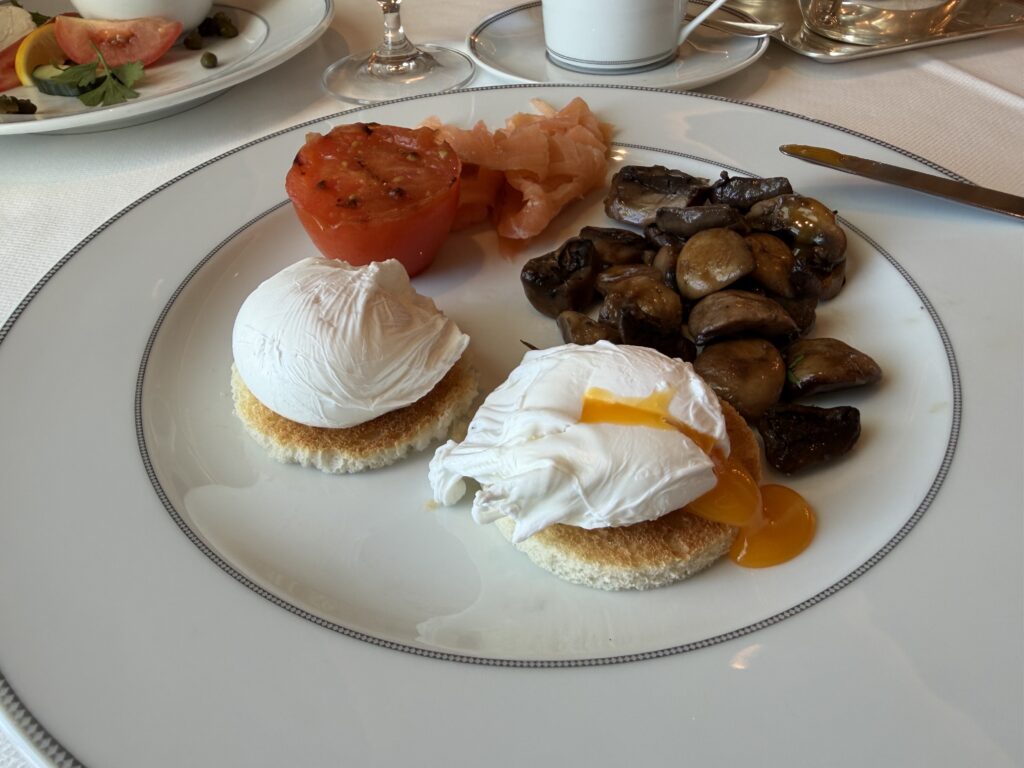
Menus for a cruise are set months before because they need to order and get ingredients delivered. It can be as far as four or five months before the cruise for some regions, like Japan.
The menus are fine tuned for each cruise based on the passenger mix booked. They have historical consumption data, so if there are say mostly USA passengers with families on one cruise but the next has mostly older British and Australian couples the items on the menus are tweaked.
Most cruise lines make between 80 to 90% of items served from scratch, and use limited pre-made or prepackaged items, partly because it takes up more storage space.
What’s not made from scratch? Usually, things like hamburger buns and hot dog rolls, pasta, chicken nuggets, and French fries.
Talking of things being from scratch and authentic, this brings me to the topic of celebrity chef partnerships and specialty restaurants as they are also not all cruisers think they are.
Celebrity Chef Partnerships
Specialty restaurants exist of course to bring in extra revenue, offer more choice to passengers, and to reduce the demand and strain on the Main Dining Room by cutting the numbers going there.
But what if you are going to one of those with a famous chef’s name attached to them like Princess Cruises’s Rudi at Sea, Holland America’s Morimoto, Royal Caribbean’s Jamie’s Italian, or Crystal’s Nobu? How much of the actual chef’s dining are you really getting?
These are licenced concepts paying the chef a fee. The Chef is involved in designing the menu, they or someone from their team trains cruise line chefs how to cook the dishes, and they approve the décor, crockery, cutlery and service style. Then they leave it to the line to handle, occasionally checking in or coming on a sailing for marketing purposes.
The crew in the kitchen and serving are all cruise line employees, and even the ingredients are those sourced and supplied by the line and mostly used across the rest of the menus too.
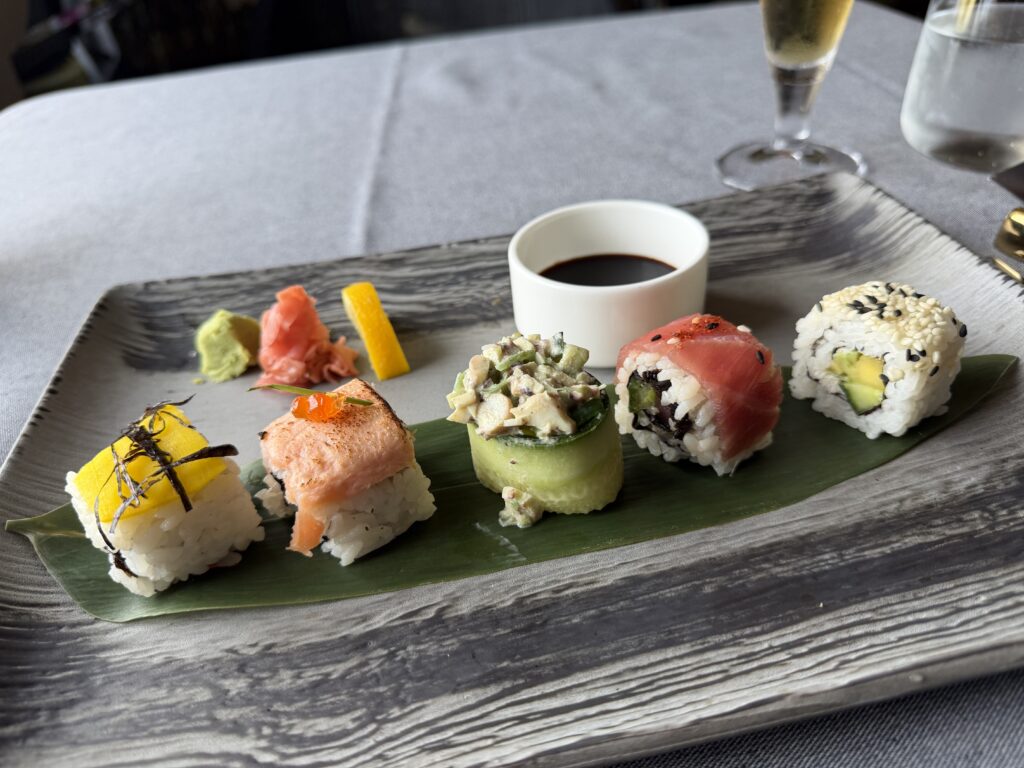
I want to come back to the topic of food costs, something the lines do not like talking about is how they are looking to reduce food costs by dramatically cutting waste and how that affects us passengers.
They Keep Cutting Food Costs by Reducing Waste
I was staggered at the scale of the targets to cut food waste to drive down costs.
Carnival Group set a target to reduce food waste by 44% and have already achieved that.
Royal Caribbean Group set a goal of reducing food waste by 50% versus 2019, and this year they hit and exceeded that.
Other groups have not published targets but all talk of it as a priority too.
Of course, the smaller menus that many passengers have noticed and complained about in recent years were part of the food waste drive as it reduced the range of ingredients they had to buy and stock and cut back the number of dishes they had to cook.
But then by using more technology, including AI, they are getting better at predicting what we passengers will order and consume which has cut waste, but also, they now are able to better real time tracking of what food and dishes are being consumed.
Thanks to this they can react to actual consumption in real time and so make smaller batches and replenish things more often in the buffet, which was the source of most food waste.
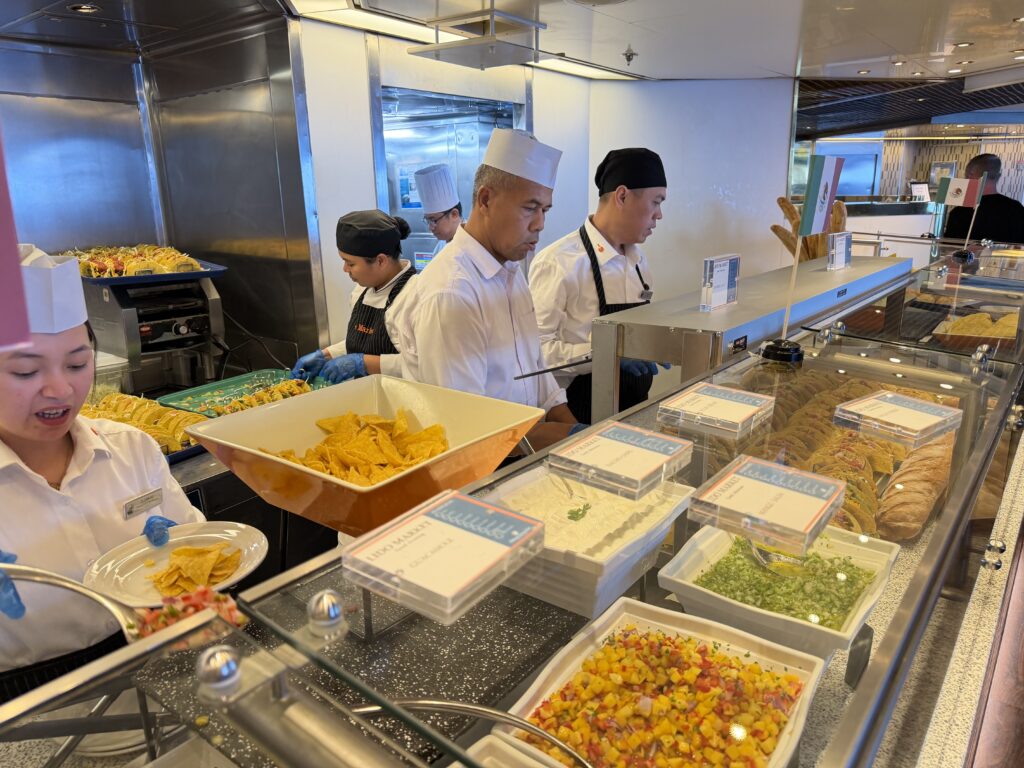
They are also reusing food more. So, items that are not used at one meal are used in the next one. It could be as simple as bread not used at breakfast that’s now turned into croutons or chicken that’s not used turned into chicken salad.
On some lines they are looking at innovative ways to reduce waste by repurposing ingredients, for example Norwegian has developed cocktails using fruit peels previously discarded by the kitchens.
Sign up to my Newsletter and never miss another post, and get bonus tips, content, and offers not posted on the blog

Discover more from Tips For Travellers
Subscribe to get the latest posts sent to your email.


Each and every time I read your posts amazes me just how appreciative I am for you. Congrats to you.