7 Things That Catch First-Timers Out On Every Queen Mary 2 Transatlantic Crossing
 7 Things That Catch First-Timers Out On Every Queen Mary 2 Crossing
I’ve crossed the Atlantic on Queen Mary 2 six times. And on every Crossing, I’ve met first timers saying the same thing: “I wish someone had told me about that before I came”. Because despite the brochures or videos they had read or watched, there are things almost every first timer still gets wrong. Some are minor. Others can completely change how much they enjoy the crossing.
Welcome aboard. I’m Gary Bembridge, and I am going to share what those things are, and how to avoid them.
The first misunderstanding is thinking it is just like doing a regular Transatlantic Repositioning Cruise on other lines, but just on the Queen Mary 2. It is not, especially when it comes to the ocean.
Transatlantic Crossing Tip: Nothing Like A Transatlantic Repositioning Cruise
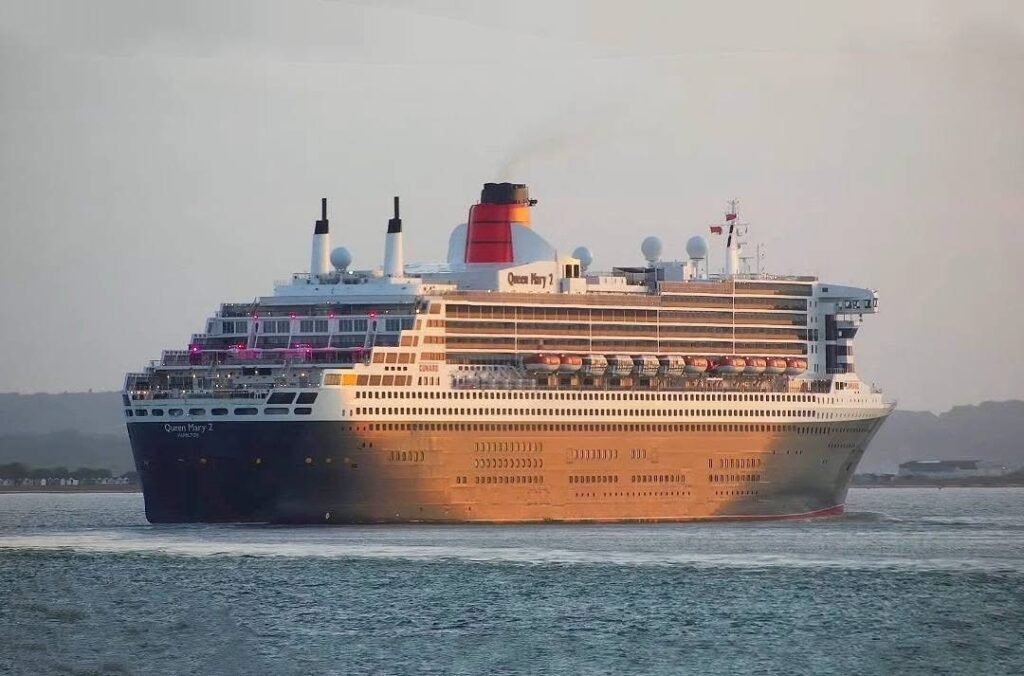
While everyone boarding knows a Queen Mary 2 Transatlantic Crossing is a scheduled week-long service running between 20 – 25 times a year between Southampton and New York, and stops at no ports along the way, they don’t always appreciate that route sails through the unforgiving North Atlantic.
Repositioning cruises by other lines and ships at the start and end of the end of the season sail mostly between Europe and the Caribbean, which means cruising the less demanding Southern Atlantic.
Most first timers do not fully appreciate what sailing the North Atlantic can entail, as even in summer, it can serve up rough seas, high winds, be chilly, and very likely foggy.
Many first timers do not pack for this variable weather and are not ready for having to be wrapped up for windy, cold and rainy days, instead of lounging outside enjoying sunny, clear and warm weather the brochures suggest.
Also, as the only ocean liner in service specifically designed for the route, while Queen Mary 2 copes with the swell and motion of the ocean better than normal cruise ships, many first timers are often surprised by how much movement there still is when seas are rougher.
On my last crossing in June, we went through, as with most of my Crossings, the full spectrum of conditions in the week. Calm seas, rougher and windy days with movement, rain, sunny clear days, preceded by days so foggy that the foghorn was blowing constantly day and night.
And I tell first timers if they suffer from motion sickness, to take medication up front. And, if they do have problems later, and cannot keep pills down, they should visit the ship’s medical centre for an injection, which has a fee, but will get them over their motion sickness.
Unlike repositioning cruises, Queen Mary 2 Crossings are not sold at a discount to regular Cunard cruises, and many first timers often do not factor in and budget enough for add on costs.
As Cunard is a premium, not a luxury line, the fare does not have many inclusions. Gratuities, drinks, Wi-Fi, and any Specialty Dining are added costs.
They do offer packages, but they are quite costly and I find many first timers buy these without first carefully assessing if they are good value versus what they will really consumer over the 7 days.
Then also there is the cost of the one-way flight home, and with 7 days at sea many do not budget fully for other up sell items like shopping promotions, photographs, bingo, craft kits for those sessions and so on.
Transatlantic Crossing Tip: Cabin Choice Matters More On A Crossing
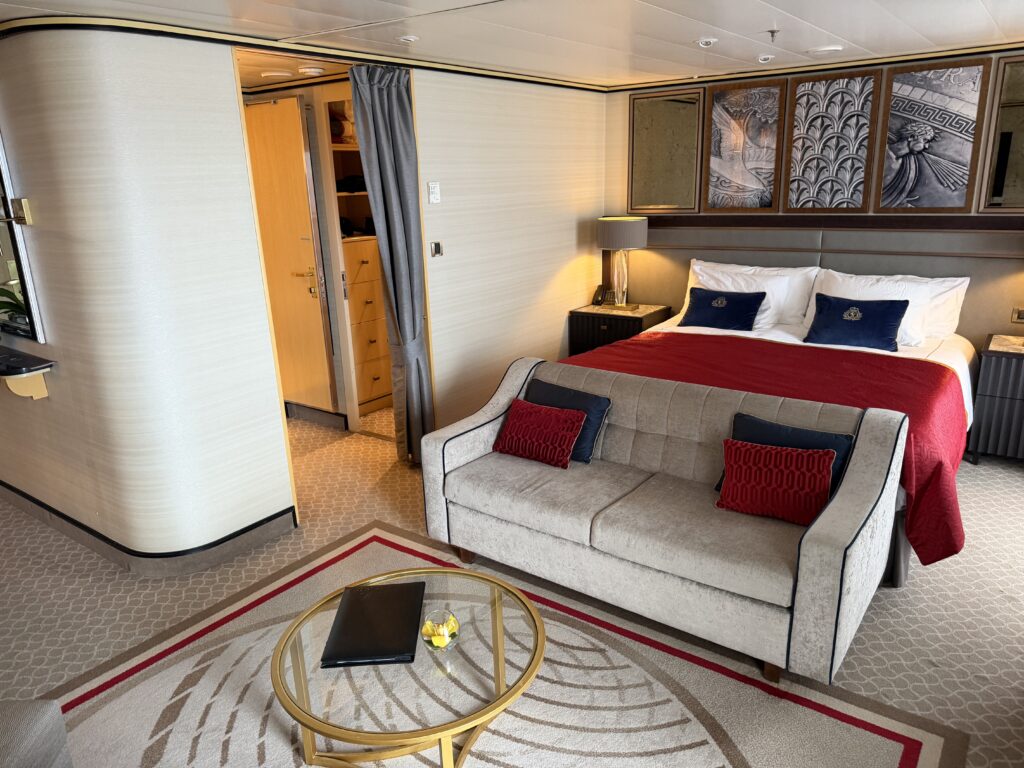
One big thing first timers I speak to say is they realise once on the trip that cabin choice matters way more than any other cruise they’ve been on.
This is for four reasons.
First, with no ports and more sea days, like me, they found they were spending more time in the cabin than when on a normal cruise.
Second, those with a balcony found due to the weather they either never or hardly used it.
Third, the cabin grade has a large impact on your dining experience.
Inside, Oceanview and Balcony cabin guests dine in the Britannia Restaurant, a magnificent two-level art deco style venue with early dining at 6:00 PM, late dining at 8:30pm where if you chose this you have a set table with same waiters, but they do also have an anytime dining option.
Britannia Club Balcony passengers dine in a venue of that name, which is a separate area in the Britannia Restaurant, but with anytime dining and a set table and waiters.
Mini-suites guests dine in Princess Grill Restaurant and suites in the Queens Grill. Both have Anytime Dining, and a set table and waiters.
While Britannia dining is good, and equivalent to other premium lines, like Holland America, Princess, and Celebrity, if you go in The Grills, the dining experience is highly elevated, and probably the best, if not some of the best cruise food, at sea, with the ability to order off menu.
On every Crossing I met first timers used to cruising on more luxury lines who were really missing the elevated food because they’d booked in Britannia rather than in the Grills.
And the fourth reason cabin choice is so key is for those worried about or prone to motion sickness, it is a really good idea to book a midship cabin and on a lower deck. You can even get balcony cabins quite low down on the ship cut into the hull!
Transatlantic Crossing Tip: Being An Ocean Liner Changes Everything
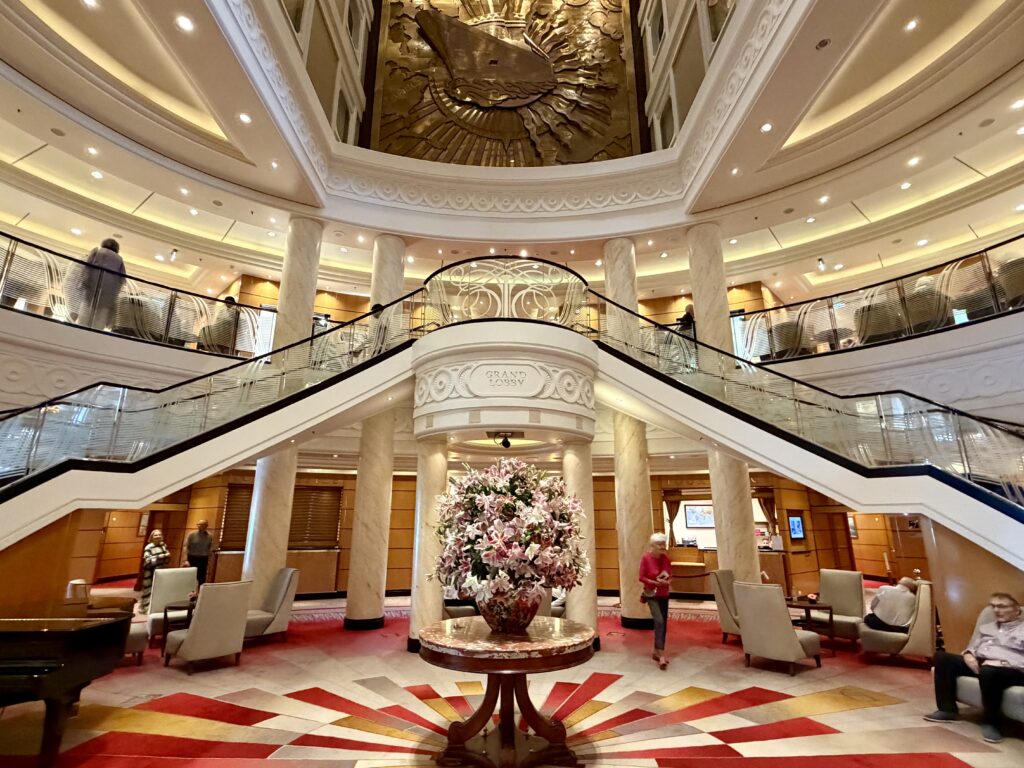
As Queen Mary 2 was built for these crossings, that has shaped the whole ship not only on the outside but inside too, leading to a quirkier layout that first timers find confusing and hard to find their way around at first, especially if used to regular cruise ships.
Many are thrown by the look and venues on the ship, not fully appreciating it is an old ship now, and has been in service for over 20 years, first sailing in January 2004.
While there is grandeur, tradition and style, many first timers miss the contemporary features of newer premium ships and find some areas and the cabins dated.
Cunard do keep updating the ship, like in 2027, by removing some venues to add cabins and to update, refresh, and add others.
As the ship was built for stability in rough seas, it has an almost maze-like layout and even I found with a two-year gap between my last two crossings, it took me a while to find my way around.
What surprises first timers are that things are not where you find them on regular cruise ships.
For example, key public spaces that are usually at the front or rear of a modern cruise ships, are instead more midships and lower down where movement when seas are rougher is less. The Britannia restaurant and the main theatre both sit far more centrally in the ship.
This means to reach the Queen’s Room ballroom, which is set behind the Britannia restaurant you must use a passageway beside the restaurant to get there, while Illuminations used for enrichment talks also means using a passageway around the more centrally located main theatre.
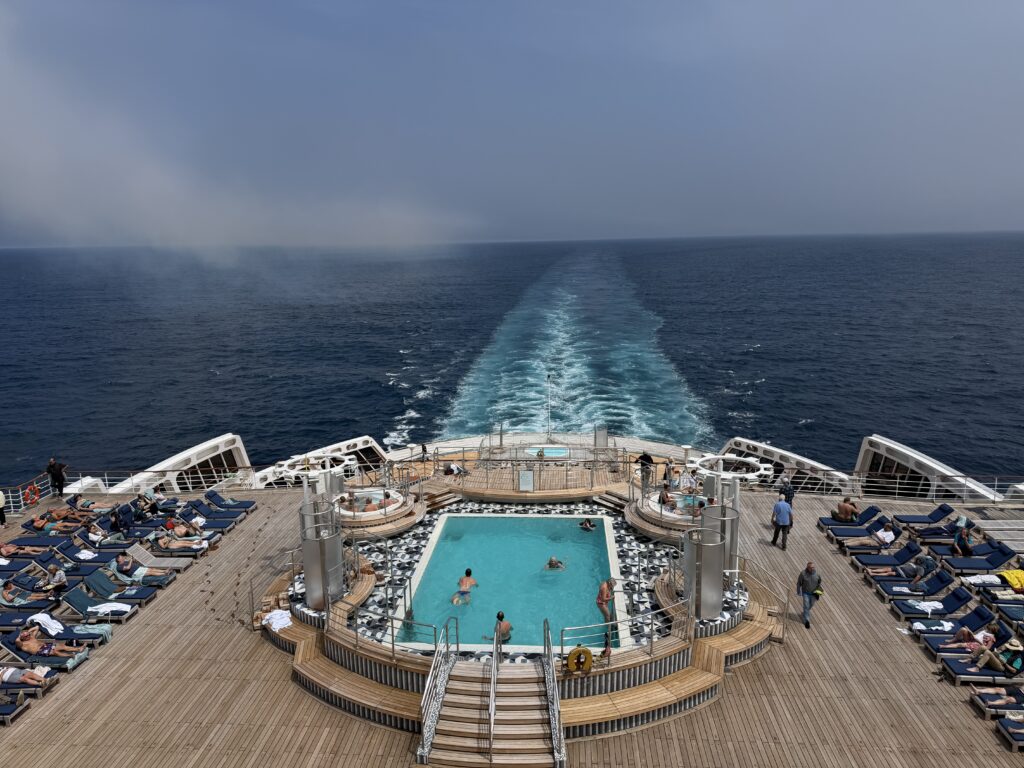
The Kings Court Buffet and many of the bars are also lower in the ship than you’d expect, and the outdoor pools are at the rear, low down, rather up on top the way they are on most cruise ships.
Many cabins also sit much lower in the ship than on a typical cruise ship, and there are even cabins with balconies cut into the hull.
There are some lovely features too, like a full teak wraparound promenade deck, and kennels for people to take dogs and cats across the Atlantic.
One positive many do not appreciate until underway is that the ship was designed assuming bad weather and passengers needing to be indoors, and so there’s a lot of interior space per passenger.
Queen Mary 2 holds around 2,700 guests at double occupancy, while regular cruise ships of the same size, like Norwegian Epic, carry up to 1,300 more passengers. Almost 50% more!
The other thing I see first timers find surprising is the pace.
Transatlantic Crossing Tip: The Pace Is Different To What People Expect
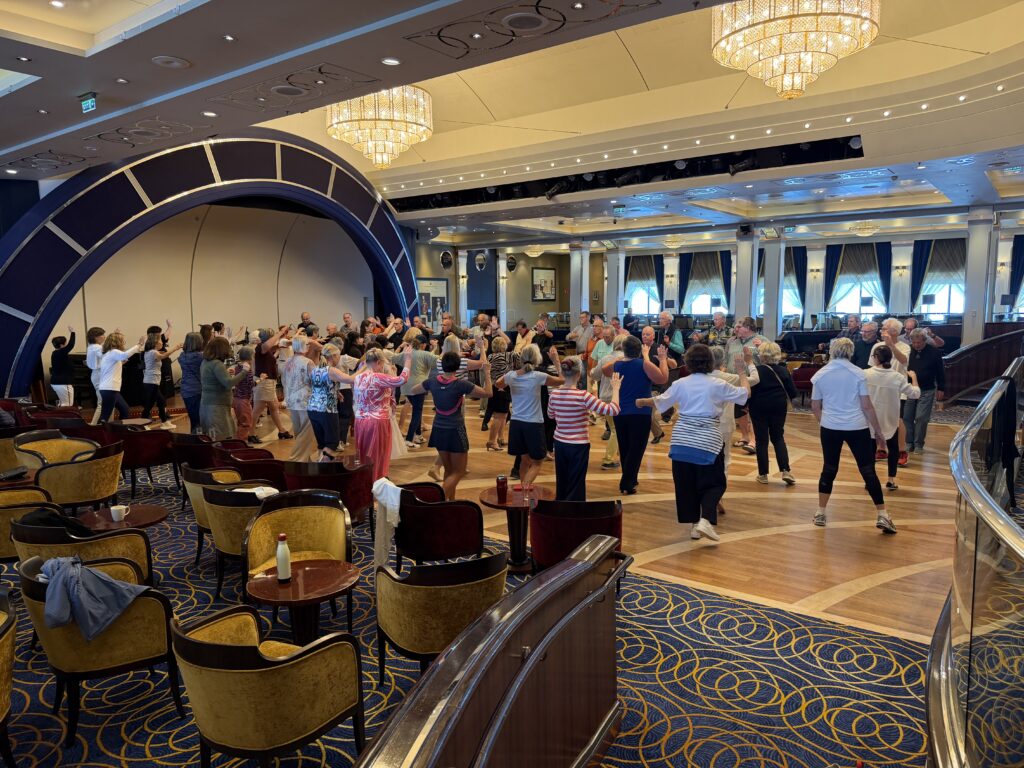
With no ports breaking things up, no excursions and no planning around shore time, first timers often expect a crossing to be laid-back, relaxed, maybe even a little boring.
Most do not find this at all, but only if they enjoy an entertainment program that leans more traditional and enrichment focused.
The Crossing is not full of empty days, and Cunard knows how to fill a week at sea, and the daily program is packed, with at least 60 activities, plus various spa, fitness and shopping activities on top of that.
Cunard splits the daily program activities into themes, such as entertainment (like shows and live music), Insights lectures from Guest Speakers, informal social gatherings (everything from veterans’ groups to LGBT meetups to crafters), Organised gatherings (like religious services, choir and sing-a-longs), and “Let’s Play” which covers things like Triva, Bingo, Silent Discos, Deck games and so on.
Three activities stand out as genuinely signature and are wildly popular on every crossing.
First, the Insights Program with four or five speakers per crossing, always including a celebrity name — an actor or actress, politician, writer or sports personality. I’ve shared crossings with people like actress Celia Imrie and, most recently, Sir Tony Robinson from Blackadder and Time Team, and on another trip, we had a former leader of the Conservative Party.
Alongside that headline name there’s always a group of three or four lecturers filling out the program too. On my recent Crossing it included a series about New York Skyscrapers, White House Operations and Organization, and Cunard History.
Second, afternoon tea in the Queen’s Room, which is jam-packed every day.
Third, ballroom dancing every night in the Queen’s Room, to a live orchestra. Cunard is one of the few lines still doing this.
There is something else about the pace that throws many passengers.
Transatlantic Crossing Tip: Time Change Catches People Out Every Time
I see on every Crossing that the time changes throw first timers out.
Sailing westbound from Southampton to New York, you get slightly longer days, because you gain an hour on five nights of the crossing.
Sailing eastbound from New York back to Southampton, you lose five hours, giving you five short days.
Generally, when you’re gaining time heading to New York, Cunard makes the change overnight; heading back to Southampton and losing time, they tend to do it in the middle of the day, because it’s less disruptive.
Either direction, it can still knock sleep and energy levels around a bit, and first timers are not expecting that.
The good news is Cunard tells you what place to set your watch or clock to each day in the daily program, but many first timers do not realise they must do it manually, because phones won’t automatically adjust to the right ship time out at sea.
On every crossing I’ve done, I’ve seen people turn up late, or far too early, for breakfast or events because they forgot to change the time.
It’s Not New York
For many people, sailing into or out of New York is a huge part of appeal of the Crossing, imagining sailing close by the Statue of Liberty and into the heart of Manhattan.
However, many first timers do not realise that Queen Mary 2 does not sail into Manhattan, but docks in Brooklyn at the Red Hook Terminal. So, although they do get a view of the Statue of Liberty, it’s not as good as ships that sail right in and out of Manhattan.
If you want to see the Statue of Liberty as you sail in, you need to be up on deck around 4:30am, which many first timers do not realise. You do get great views of the Manhattan skyline as the ship comes in, but it’s just not as dramatic as it was back in the QE2 days, when that ship docked right in Manhattan itself.
The other thing that people often misunderstand is, the dress code.
Transatlantic Crossing Tip: The Dress Code Isn’t Exactly What People Think
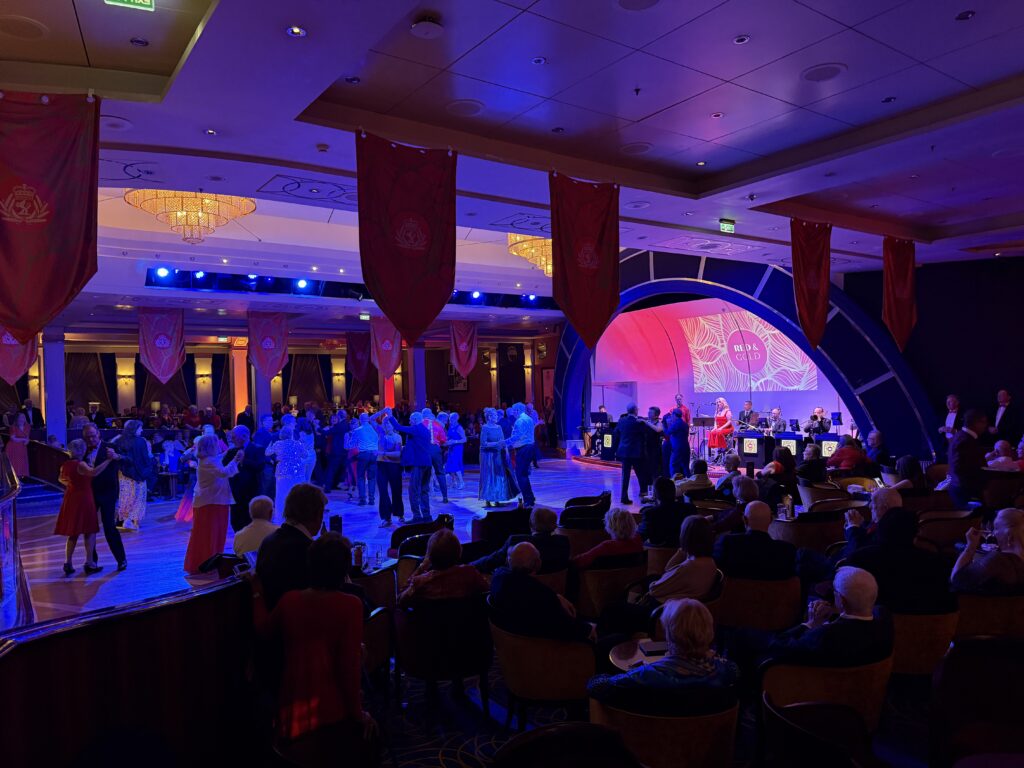
Like many first timers, on my first I Crossing I took basically only smart clothes, thinking that all day I was expected to be dressed smartly. This is not the case.
Daytime is very casual — shorts, T-shirts, baseball caps, whatever you like.
Most nights after 6pm it’s smart casual to go to your allocated dining room. This means men can wear chinos, smart jeans with a collared or polo shirt, and ladies can wear smart dresses, skirts with blouses, or stylish trousers. The only real no-go items are T-shirts, shorts, ripped jeans, and sportswear.
Cunard does hold two Gala evenings on the Crossing.
On those two nights, to go to the dining room men are asked to wear dinner jackets, tuxedos, or suits with a tie, and women evening gowns, ball gowns, cocktail dresses, or a smart trouser suit.
But, if you’d rather not dress up on any night on a Crossing and prefer to stick to T-shirts and shorts, you can dine in the King’s Court Buffet and the pop-up Speciality Dining venues they have in there.
Afterwards you can enjoy most of the public venues, like the Golden Lion Pub, Carinthia Lounge, King’s Court Theatre to see the show, go gamble in casino, and go to the night club. Only the Queens Room dancing, and a bars like The Chart Room and Commodore Club are considered off limits if not following the Dress Code.
But most people on a Crossing are there to embrace the dressing up. I would estimate almost 90% of people will get dressed up on those two gala nights. Also, those nights will normally be themed, like Roaring 20s, Black and Red or Masquerade Ball, and many will embrace those.
Sign up to my Newsletter and never miss another post, and also get bonus tips, content, and offers not posted on the blog
Free and Premium Perk Options

Discover more from Tips For Travellers
Subscribe to get the latest posts sent to your email.