Your Cruise Questions Answered #4: Cruise Deals, Japan, Insurance, Tipping & More
 Your Cruise Questions Answered: Cruise Deals, Japan, Insurance, Tipping & More
Should you book your next cruise while you’re still on board? Can you lose your cabin if a cruise is overbooked? How do you get the best price on a Viking cruise? How much cash should you take on a cruise? And which ports should you make sure are included on a first cruise around Japan?
Those were some of the questions I was asked in my latest live Tips For Travellers cruise Q&A.
This is Part 4 of my “Your Cruise Questions Answered” series, where I take a selection of the most popular, interesting and useful questions cruisers ask me during my regular live Q&As and turn my answers into an easier-to-search resource.
As usual, I’ve grouped the questions by topic rather than the order they came up in the live session.
Choosing A Cruise Line And Ship
Scenic vs Explora Journeys vs Oceania: Which Is Best For A Small-Ship Mediterranean Cruise?
These are actually three quite different cruise experiences.
First, look carefully at the itineraries because in some parts of the Mediterranean the ports may be surprisingly similar.
If you’re cruising the Western Mediterranean, for example, you may find all three visiting many of the same destinations. The smaller ship may be able to dock closer to the centre in some places, but don’t assume that choosing a much smaller ship automatically means a completely different itinerary.
Where they differ more is the onboard experience.
Scenic’s ocean ships give you the smallest and most intimate experience of the three. They are getting into what I’d call yacht territory and are likely to be the most expensive option. You have fewer passengers, a very premium experience but inevitably less choice around the ship.
Explora Journeys is much larger, at just under 1,000 passengers. It operates towards the ultra-luxury end of the market, with beautiful ships, lots of dining choice and a high level of inclusions.
Explora is also worth considering if you’re travelling with children. Explora III has separate kids’ clubs for different ages, while Explora I and II have one club with the programme split between age groups. During school holidays, there can be quite a lot of children on board.
Oceania is now moving to an adults-only experience and is likely to be the least expensive of these three options.
It also has fewer inclusions, so things like drinks packages are extra. Specialty dining, though, is included.
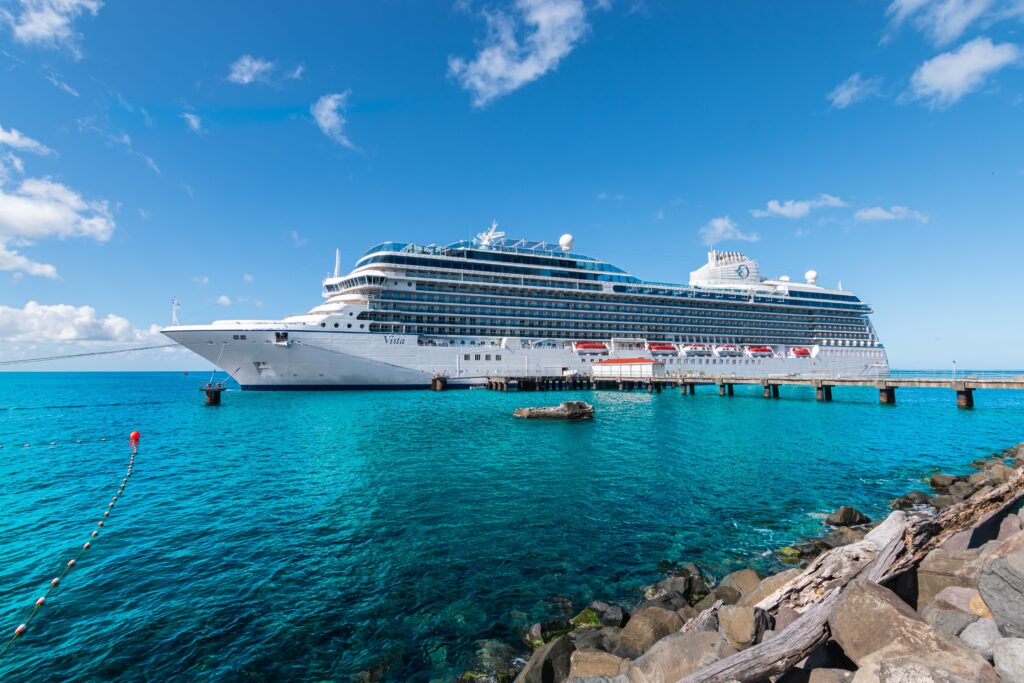
I’d favour Oceania’s larger ships if dining choice matters because ships like Vista, Allura, Marina and Riviera have more specialty restaurants than the smaller R-class ships.
So, rather than asking which of the three is “best”, decide what you’re looking for.
For a very small, intimate and premium experience, look at Scenic. For a more inclusive luxury-style experience, including travelling with children, look at Explora. For an adults-only small-ship experience with excellent food and generally a lower entry price, look at Oceania.
How Do I Rate Regent Seven Seas Splendor After My Recent Cruise?
I had a great time on Regent Seven Seas Splendor.
I’ve sailed on Splendor before and really like the size of the ship. I normally book a Serenity Suite, which is towards the lower end of the suite categories but is still a very comfortable size.
The cabins are excellent and quiet, and the food is very good.
Regent has also introduced something I particularly like: casual evening dining at the Pool Grill.
One of my frustrations with some ultra-luxury lines has been the lack of casual dinner options. You don’t necessarily want to sit through a long multi-course meal every night.
The Pool Grill option worked well even when the weather wasn’t particularly good because there are heaters outside.
Entertainment on Regent is fine, but I wouldn’t choose Regent because of the entertainment. The production shows and other entertainment are good enough, but this isn’t a big resort-style ship.
My biggest criticism remains the destination enrichment.
Regent doesn’t have the depth of destination-focused port talks I think it should have, particularly considering the interesting itineraries it operates.
That becomes especially noticeable somewhere like the Panama Canal, where there is an extraordinary amount of history and information to explore.
So, Splendor remains a ship and cruise line I really enjoy. The cabins, food, service and general onboard experience are excellent. I’d just like Regent to significantly strengthen its destination programme.

Do Cruise Lines Normally Charge Extra For Theatre Shows?
Usually, no.
On the mainstream cruise lines, your main theatre entertainment is generally included in your fare, although you may need to make a reservation for some popular shows.
There are some exceptions.
MSC has had a separate entertainment venue on some of its larger ships with a Cirque-style show for which there is an additional charge.
Cunard also introduced a charge for its Bright Lights Society cabaret venue on Queen Anne. When Queen Anne originally launched, you had to reserve because the venue has limited capacity, but there was no charge. A fee was introduced later.
P&O Cruises has its Limelight Club, although that’s slightly different because it’s a dinner-and-show experience, so you’re also paying for the meal.
But if you’re sailing on lines such as Royal Caribbean or Norwegian, the big headline shows are generally included.
So, paying extra to see entertainment is still the exception rather than the rule.
Booking Cruises And Getting The Best Deal
Is It Worth Booking Your Next Cruise While You’re Still On Board?
There can be advantages, but I would only do it if I’m already confident I want to take that particular cruise.
The danger is getting swept up in the excitement of being on a cruise.
Cruise lines understandably push future cruise bookings heavily because they want to lock you into sailing with them again.
On my five-night Norwegian Aqua cruise, for example, I had repeated messages and promotional material encouraging me to make another booking.
The incentives vary.
Sometimes you’ll get a small additional discount, although more commonly I find the extra benefit is onboard credit.
For UK cruisers, there can be another useful benefit.
Deposits in the UK are normally non-refundable, and changing your cruise can effectively be treated as cancelling one booking and making another.
Some onboard booking schemes provide more flexibility to move your booking to another cruise without losing the deposit.
Another important point is that if you use a travel agent, you can normally have the onboard booking transferred to your agent. They can then manage the booking and arrange all the additional travel you need.
But don’t assume the onboard deal is automatically the best deal.
You may discover that another itinerary, cabin or even cruise line offers much better value than the onboard incentive you’re being offered.
I only book on board when I’ve already decided I want that specific cruise or cruise line.
How Do You Get The Best Price On A Viking Cruise?
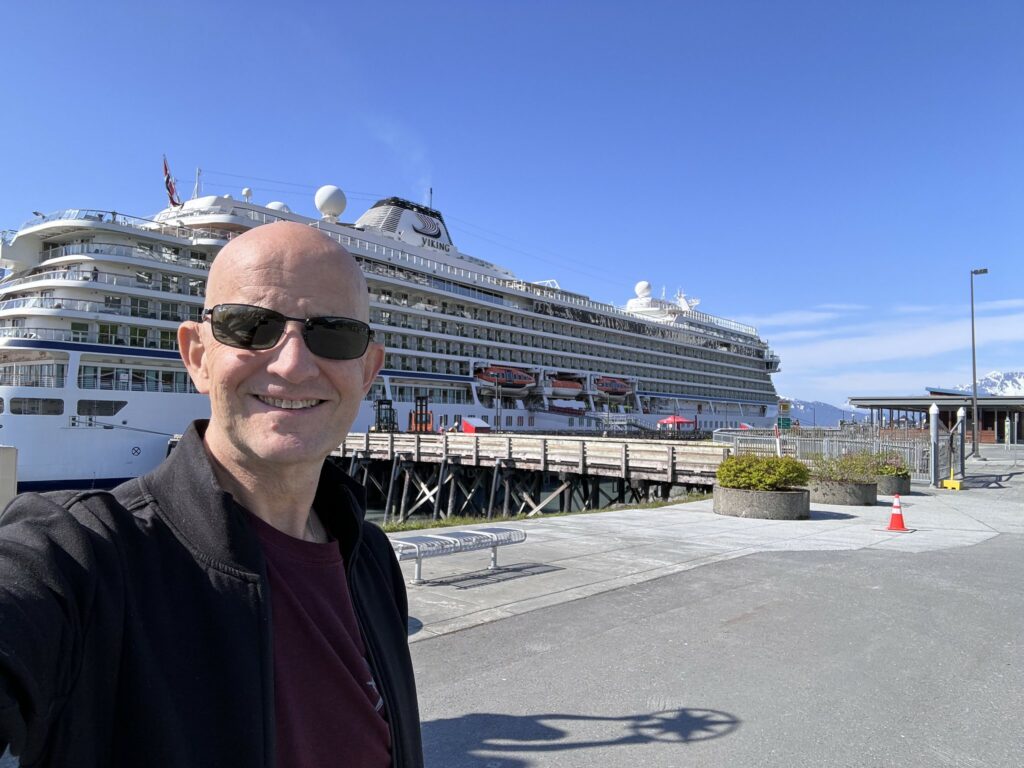
With Viking, I’d generally book early.
Viking has been operating with extremely high demand and selling a substantial amount of its capacity well in advance.
With dynamic pricing, that means fares tend to rise as cabins sell.
So, unlike cruise lines where you might wait for significant late deals, Viking is one where I think there is a strong argument for booking the cruise you want when itineraries are first released.
The other part of the question was whether it’s worth booking flights through Viking.
Personally, I normally arrange my own flights.
Partly that’s because I want to use particular airlines, collect loyalty points or use air miles. I also frequently want to spend extra time in the destination before or after the cruise.
Cruise line air arrangements can sometimes involve connections or routings I wouldn’t choose myself because they’re trying to construct the package using their airline arrangements.
However, there is an obvious advantage to having the entire trip tied together.
If simplicity is your priority, the cruise line flight package may appeal.
For me, having more control over the airline, routing and dates normally wins.
How Does Holland America’s Standby Cruise Programme Work, And What Should You Book First?
Holland America’s standby fares are interesting because you can potentially get a cruise for a very attractive price, but you may not know whether you’re actually sailing until very close to departure.
That creates a planning challenge.
If you get confirmed at the last minute, I’d prioritise shore excursions and specialty dining.
Popular excursions may already be sold out, so before you even know whether you’re sailing, research the ports and decide what you’d like to do.
Also investigate independent alternatives.
Then, if your booking is confirmed, you can immediately check what’s still available rather than starting your research from scratch.
Specialty dining can also be difficult, particularly if you like eating early.
Once you’re on board, I’d speak to the specialty restaurant team and see what they can do.
Entertainment is much less of a concern on Holland America because you generally won’t find yourself locked out in the same way.
So, if you’re using a standby fare, do the research before confirmation. Then, once you’re told you’re sailing, prioritise excursions and dining.
Can You Lose Your Cabin If A Cruise Ship Is Overbooked?
If you’ve selected and booked a specific cabin, I think the chances of being bumped because of overbooking are much lower than if you’ve booked a guarantee fare.
When a cruise line has overbooked, it will normally first try to find passengers willing to give up their cruise voluntarily in return for compensation, future cruise credit or another incentive.
If that isn’t enough, passengers booked on guarantee fares are more exposed because the cruise line hasn’t actually assigned them a specific cabin.
There is, however, another situation worth knowing about.
Even when you’ve selected a specific cabin, cruise lines can sometimes move you before the cruise.
One example I’ve seen is when two people book a cabin designed to accommodate three or four passengers.
If the cruise line later needs that cabin for a family and has no other suitable family cabins available, it may move the couple into a two-person cabin elsewhere.
So, choosing a specific cabin doesn’t necessarily mean it’s absolutely impossible for the cruise line to move you.
But when it comes specifically to an overbooked sailing, I’d be much more comfortable having an assigned cabin than a guarantee cabin.

Cruise Money, Cash And Tipping
How Much Cash Should You Take On A Cruise?
I’m probably not the best example because I take more cash than most cruisers.
At home, I hardly ever carry cash. But on a cruise I do because I have a separate gambling budget that I roll from one cruise to the next.
Within that cash, though, I also make sure I have money available for extra tips.
For crew who have gone above and beyond, particularly cabin stewards, I might work on roughly $3 to $5 per day as an additional tip on top of the included or automatic gratuities.
I also make sure I have plenty of small denomination notes – particularly $1 and $5 notes – for guides and other people ashore.
How much you need therefore depends on what you do.
If you’re not gambling, using cash in ports or giving additional tips, you may need very little because almost everything on the ship itself goes onto your cruise account.
But I’d still take some smaller denomination cash for those situations where it is useful.
Should You Tip Cruise Crew And Tour Guides In US Dollars?
Most of the time, I do.
If I’m on a UK cruise line where the onboard currency is pounds, such as P&O Cruises, I’d tip in sterling.
On a European river cruise, I’ll generally use euros because that’s the onboard currency and it makes sense for the crew.
But on many ocean cruises, I use US dollars.
That also applies to many Caribbean and South American ports because guides and people working with tourists are accustomed to receiving dollars.
There is one important warning: make sure your US dollar notes are in good condition.
I’ve seen vendors in South America refuse US dollar notes because they had a small tear or a damaged corner.
A guide explained to me that damaged US currency can be extremely difficult or impossible for them to exchange or deposit.
So don’t take your tatty old dollar bills on a cruise thinking they’re ideal for tips.
Take clean, undamaged notes.

Japan Cruise Questions
Which Ports Should A First-Time Japan Cruise Include?
I’m working on a much more detailed guide to cruising Japan because I’ve now visited around 18 Japanese cruise ports.
But there are some things I’d particularly look for on a first Japan cruise.
First, allow as much time as possible in Tokyo before or after your cruise.
I’d ideally spend four or five days there rather than treating Tokyo as simply somewhere you fly into the day before embarkation.
If you’re sailing from Yokohama, there are also things worth seeing there.
I’d then look for an itinerary including Nagasaki or Hiroshima – ideally both.
I think understanding the Second World War and atomic bomb history is an important part of visiting Japan.
Both have peace parks and museums. Hiroshima’s museum can be particularly harrowing, while Nagasaki also has places such as Glover Garden.
I’d also want Osaka or Kobe, ideally with enough time to visit Kyoto.
Kyoto is around an hour or more away, so you really need a full day. But don’t use all your time simply travelling to Kyoto because Osaka itself is worth exploring, including Osaka Castle.
Kochi is another port I’ve really enjoyed, particularly for its castle.
Then, as you head further north, ports such as Aomori and Hakodate offer yet more variety.
The important thing is not simply to count how many Japanese ports an itinerary visits.
Look at which ports it visits and how much time you have in them.
For a first Japan cruise, Tokyo, Kyoto access through Osaka or Kobe, and Nagasaki and/or Hiroshima would be high on my list.
Australia, Caribbean And Mediterranean Port Questions
What Are The Best Things To Do In Darwin From A Cruise Ship?
I’ve been to Darwin twice and really enjoyed it.
It has a very distinctive atmosphere and there’s more to do than you might initially expect.
One place I’ve enjoyed is Crocosaurus Cove, which is right in the city.
As the name suggests, crocodiles are a major part of it, including some enormous saltwater crocodiles. There are also snakes and other Australian reptiles.
Darwin also has a fascinating Second World War history.
The city was attacked during the war, and there’s a museum covering Darwin’s wartime story which I found extremely interesting.
There’s also a hop-on-hop-off bus, which is useful for getting beyond the immediate centre.
Near the waterfront you’ll find the wave lagoon, where people can swim and even surf in a controlled environment.
That’s particularly significant in Darwin because the sea may look inviting, but saltwater crocodiles and dangerous marine life mean you need to take local swimming warnings extremely seriously.
With two days in Darwin, I’d combine the city attractions and wartime history with something that gets you further out of the centre.

What Are My Favourite Caribbean Cruise Islands?
I find it difficult to choose because I enjoy the Caribbean largely as an escape from the European winter.
But I do particularly like the southern Caribbean.
Curaçao is one I enjoy, and I’ve had a great time in Bonaire, particularly because I like snorkelling and Bonaire has excellent opportunities for it.
I also really like St. Barts.
It’s different from many Caribbean cruise ports because mainly smaller ships call there. I’ve visited on Regent and loved the beaches and the rather chic, upmarket French atmosphere.
St. Martin/Sint Maarten is another favourite because of the contrast between the French and Dutch sides of the island.
So, rather than having a definitive number one and number two, I tend to gravitate towards the southern Caribbean and islands that offer something distinctive beyond simply having a beach.
What Should You See In Kotor, Dubrovnik And Split On An Adriatic Cruise?
I’ve visited all three, including on a Viking Adriatic itinerary, and they’re ports where I’ve been happy exploring independently.
In Kotor, you’re right by the beautiful walled old city.
You can easily walk around independently, although an included walking tour can give you more of the history.
If you’re reasonably fit, one of my favourite things is climbing above Kotor.
It’s a substantial climb, and you don’t necessarily have to go all the way to the top, but the higher you get, the more spectacular the classic views become over Kotor and the surrounding bay.
In Dubrovnik, the old city is the obvious highlight.
I strongly recommend walking the city walls, either independently or as part of a guided tour.
If you’re a Game of Thrones fan, you’ll also recognise various locations used during filming.
In Split, I again enjoy exploring the historic centre on foot.
Walk through the old town and then spend some time on the waterfront promenade with its restaurants, cafés and people-watching.
All three are good examples of ports where you don’t necessarily need an expensive excursion to have a rewarding day.
River Cruise Questions
What Extra Excursions Are Worth Doing On An AmaWaterways Nile Cruise?
There were two optional experiences that particularly stood out for me.
The first was afternoon tea at the Old Cataract Hotel in Aswan.
The second was the trip to Abu Simbel, which involved flying there.
Both were memorable and I’d recommend them.
AmaWaterways already includes many of the major sights you’ll want to see, including the key attractions around Cairo.
So I wouldn’t feel you have to keep adding paid excursions simply because they’re available.
The core itinerary is already extremely busy.
For me, the Old Cataract Hotel and Abu Simbel were the two additions I’d particularly prioritise.
Which Mekong River Cruise Itinerary Would I Recommend?
I’ve only done the Vietnam and Cambodia section of the Mekong, so I can’t fairly compare it with the further upstream itineraries into Laos.
But I absolutely loved the Vietnam and Cambodia itinerary.
You get the contrast between the major cities and the much smaller communities and places along the river.
Our overall trip incorporated places such as Ho Chi Minh City, and the Cambodia section can be combined with Angkor Wat.
It’s one of the river cruise experiences I’ve enjoyed most because you’re not simply looking at scenery from the ship.
You’re getting into the history, culture and everyday life of Vietnam and Cambodia.
So I can’t tell you that it’s better than the upstream alternatives I haven’t experienced, but I can certainly recommend the Vietnam-Cambodia route based on my own trip.
Cruise Insurance And Practical Planning
What Should Cruise Travel Insurance Cover?
I’m working on a dedicated video about cruise travel insurance because it’s a topic I’m asked about constantly.
The first thing I’d check is that your travel insurance specifically covers cruising.
Don’t assume an ordinary travel policy – including insurance provided through your bank account or credit card – automatically provides all the cover you need for a cruise.
Cruise-specific cover can include important issues such as medical evacuation from a ship and the costs created if you’re disembarked for medical treatment somewhere during your cruise.
Those costs can become enormous.
The second thing I’d do is arrange insurance when you book the cruise, not just before you travel.
One of the important reasons for having insurance is cancellation cover. If something happens between booking and sailing, you want to know you’re protected according to the terms of your policy.
Third, look carefully at the actual limits.
If you’ve booked a $20,000 or $30,000 cruise but your cancellation cover only goes up to $5,000, you have a problem.
Look at baggage limits too, including the maximum amount covered for individual items.
And if you’re sailing with a line that specifies minimum levels of insurance – as some UK cruise lines do – make sure your policy meets those requirements.
Don’t buy travel insurance based solely on price.
Work through what is actually covered, what isn’t covered and whether the financial limits make sense for the trip you’ve booked.
More Cruise Questions Answered
This is Part 4 of my Your Cruise Questions Answered series, where I take some of the questions asked during my live Tips For Travellers cruise Q&As and turn them into a resource you can refer back to when planning your own cruises.
And this week’s questions highlight something I find myself saying repeatedly.
Cruise planning is often about looking beyond the headline offer.
An onboard booking discount isn’t necessarily the cheapest way to book. A guarantee fare brings different risks from selecting a cabin. A small ship doesn’t necessarily take you to completely different Mediterranean ports. Travel insurance isn’t much use if the financial limits don’t cover the trip you’ve actually booked. And a Japan itinerary with lots of ports isn’t necessarily better than one with fewer but more important ports and longer stays.
Those are exactly the sorts of things I try to focus on in these live Q&As.
If you have a cruise question you’d like me to tackle in a future live Q&A – and perhaps include in the next Your Cruise Questions Answered – add it in the comments.

Discover more from Tips For Travellers
Subscribe to get the latest posts sent to your email.