Best Cameras For Travel Videos? Here’s the Cameras I Use To Make My Videos And Why!
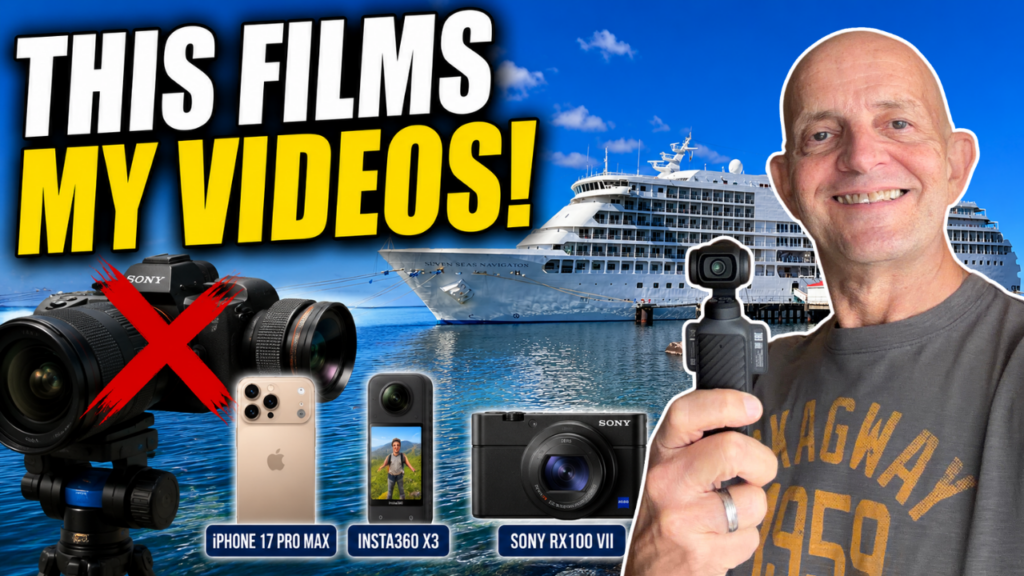 The Cameras I Use To Make My Cruise Videos – And Why My Camera Bag Keeps Getting Smaller
I am frequently asked by my Tips For Travellers followers what cameras and equipment I use to film my YouTube videos.
The answer has changed dramatically over the years.
When I started making travel videos, getting good-quality footage meant travelling with a relatively large DSLR camera, lenses, tripods and various accessories like gimbals. Today, most of the footage you see in my videos is filmed on cameras that can usually fit in my pocket.
All while the quality I get from these tiny cameras is considerably better at 4K quality than I could achieve from much larger and more expensive equipment shooting in HD 1080 not that long ago.
This has been revolutionary for all my travels as I don’t have to lug around a large camera bag and tripod. I also want to be able to film discreetly without making other passengers feel as though they have walked onto a film set.
So, here is the camera equipment I currently use to make my Tips For Travellers videos.
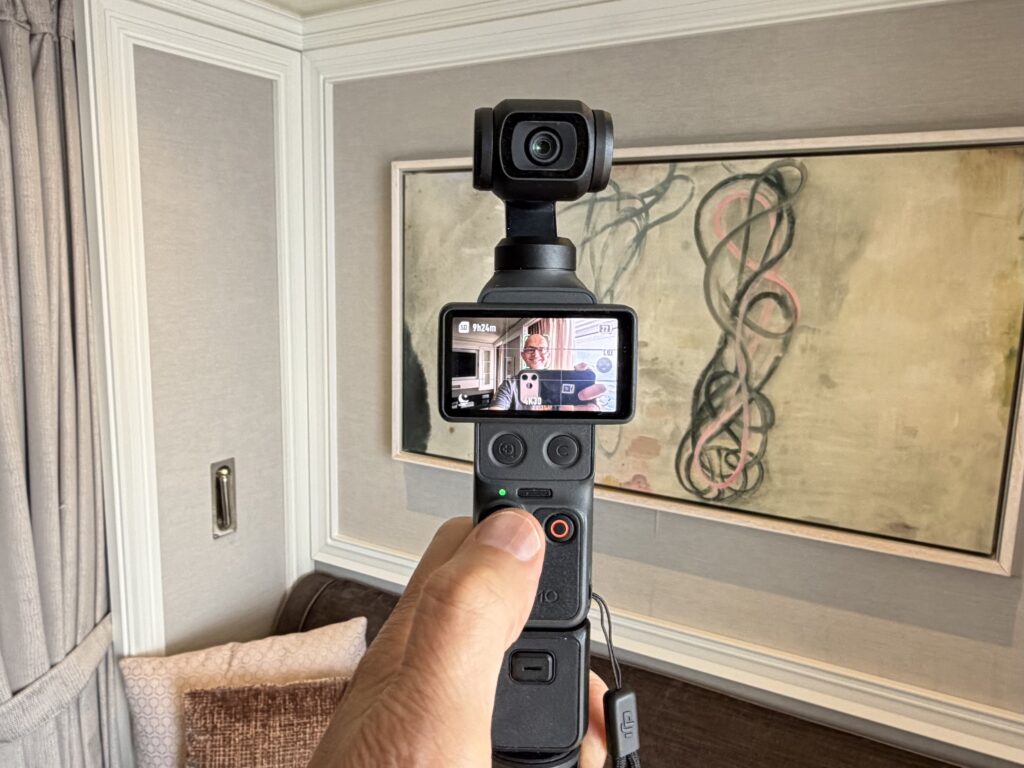
My Main Camera: DJI Osmo Pocket 4
- DJI Osmo Pocket 4 Creator Combo Amazon USA: https://amzn.to/4gWdU3M
- DJI Osmo Pocket 4 Creator Combo Amazon UK: https://amzn.to/4wTQml0
The camera I use for most of the footage you see in my cruise videos is with a DJI Osmo Pocket 4.
This is a small handheld video camera with built in gimbal. The gimbal constantly moves the camera to compensate for movement, which is means I can get smooth footage.
Instead of carrying a large camera and separate stabilising gimbal, I have essentially got both in something I can easily carry with one hand or put in my pocket.
The Pocket 4 is excellent in low light with a dedicated setting that gives impressive results, making it ideal for shooting on cruise ships in places like theatres, restaurants and cabins. Good low-light performance matters enormously to me for my video making.
Another reason I like it is that it is incredibly quick to use. I have it to hand, flick the screen to it on and can start filming.
I bought the Creator Combo, which includes a DJI wireless microphone transmitter that connects directly to the camera. That has turned out to be particularly useful because I also use the Pocket to record many of my informal on-cruise updates for my Patreon Patrons and YouTube Members.
The only weak area is the zoom function, so I have other cameras I use when I need that.
But, for anyone that wants one small camera for travel videos, this would be the first one I would look at.
My iPhone 17 Pro Max
- Apple iPhone 17 Pro Max Amazon USA: https://amzn.to/4gAcBGB
- Apple iPhone 17 Pro Max Amazon UK: https://amzn.to/4gXEBVP
I also use my iPhone 17 Pro Max for some footage.
Smartphone cameras have become so good that there are times when there is little reason to get another camera out, particularly if I spot something unexpected or just need a quick shot. And it has very good shot stabilisation, zoom, and shots in 4K too.
It also has another advantage: people pay much attention to somebody using a phone to film and take pictures as everyone is these days.
That helps when filming on a cruise ship and out on tours. I want to avoid disturbing passengers, and sometimes filming with a phone is less intrusive than using even the DJI Osmo Pocket.
But the fact that a phone I am already carrying can produce footage good enough to appear alongside footage from dedicated cameras shows just how much things have changed.
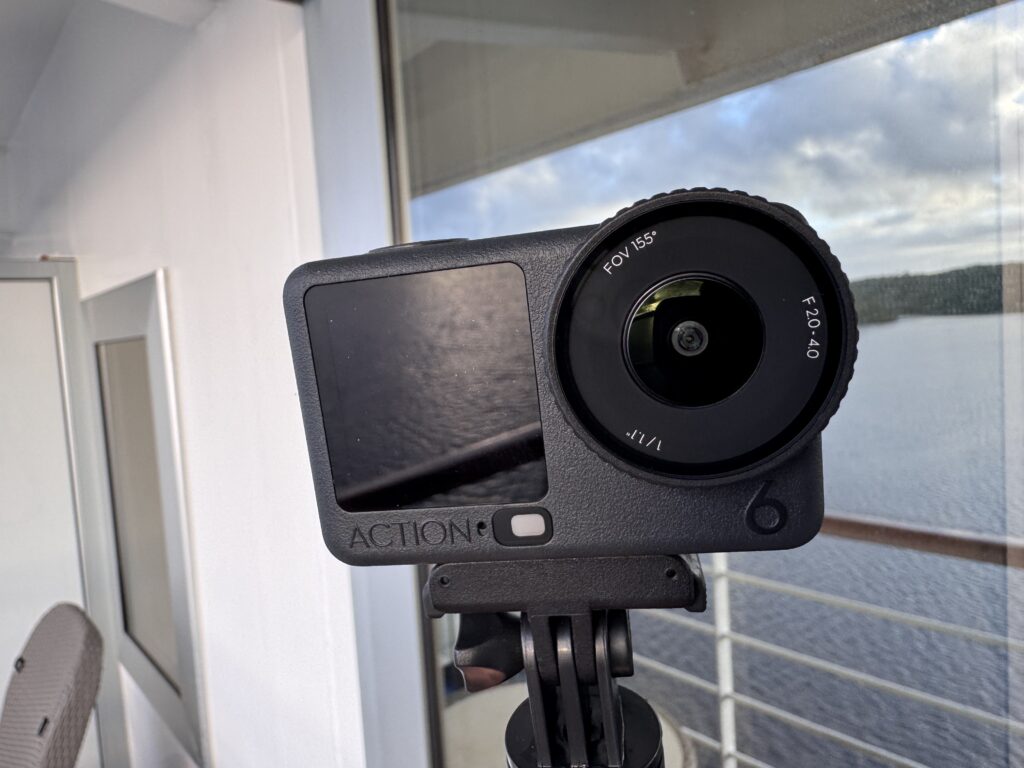
For Swimming and Underwater: DJI Osmo Action 6
- DJI Osmo Action 4 Amazon USA: https://amzn.to/4xxmgVK
- DJI Osmo Action 6 Amazon UK: https://amzn.to/4gUUhsW
For years, like many travellers, I used a GoPro whenever I needed an action or underwater camera.
I have now replaced that with what I feel is the much better DJI Osmo Action 6.
This is what I now use if I am snorkelling, swimming, or want underwater shots. You can see how good it is in this short clip of a recent wreck I snorkelled around and through: https://youtu.be/Wf5otVkg7SQ
The Action 6 is waterproof to 20 metres without a waterproof housing, and it also has remarkably stable footage – much better than my old GoPro
One of the things I particularly like is the colour. Underwater video is notoriously difficult because colours change dramatically and the light changes. DJI has a colour-temperature sensor built into the Action 6 to help deal with complex lighting and colour changes, including when filming underwater, and I have been blown away by how good it is.
My “Drone” Without A Drone: Insta360 X3
- Insta360 with Invisible Selfie Stick Amazon USA: https://amzn.to/4wXjA2r
- Insta360 with Invisible Selfie Stick Amazon UK: https://amzn.to/4gURujs
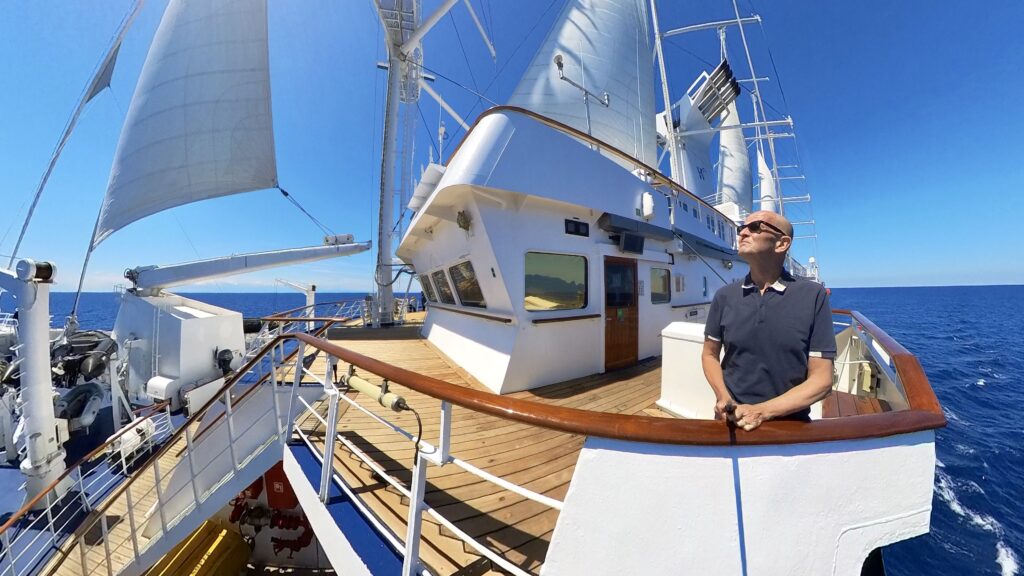
Another camera I get asked about a lot is the Insta360 X3. They see the more drone-like shots over the side of a cruise ship, me seemingly being filmed sitting on a zodiac or catamaran from the side, or walking through the ship.
This is a very different type of camera because it records everything around it in 360 degrees.
The clever part is the Invisible Selfie Stick. The software removes the stick from the footage as it is where the image from the upper and lower lenses are merged. This all makes it look as though a camera is floating several feet in front of or above me.
Insta360 itself describes the effect as creating aerial or third-person views without a drone.
That is why I use it.
Drones are prohibited by most cruise ships and now in many of the ports and sights I visit. The Insta360 can give me some surprisingly drone-like shots without flying anything.
It is also useful when I am walking and want to show myself in a context and in a surrounding.
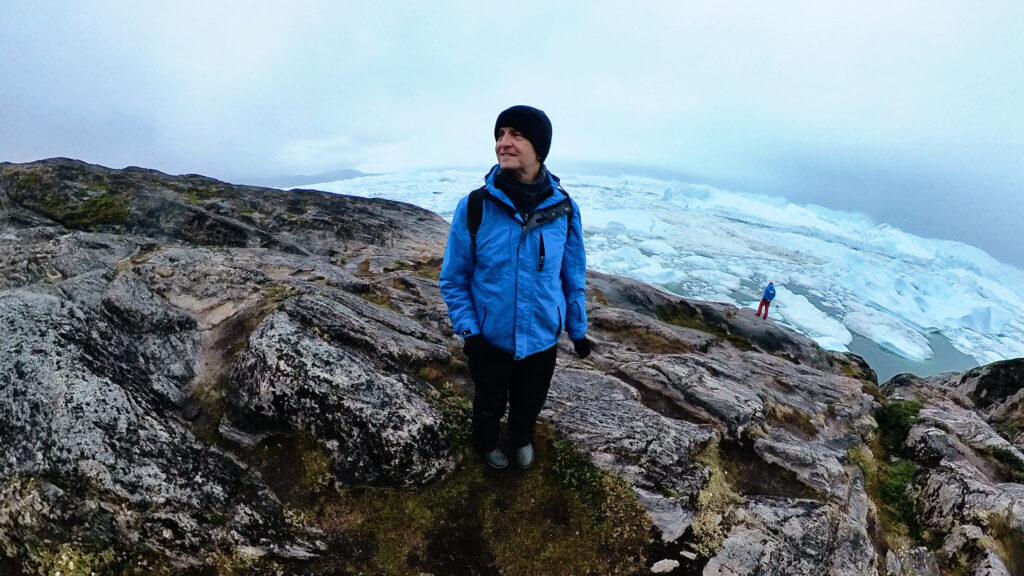
Because it captures 360 degrees, I don’t even have to decide exactly where the camera is pointing when I film. I can choose the framing afterwards during editing.
Mine is the older X3 rather than the latest Insta360 model, because it still does everything I need it to do, and I try and not overuse it. Though I may upgrade at some point.
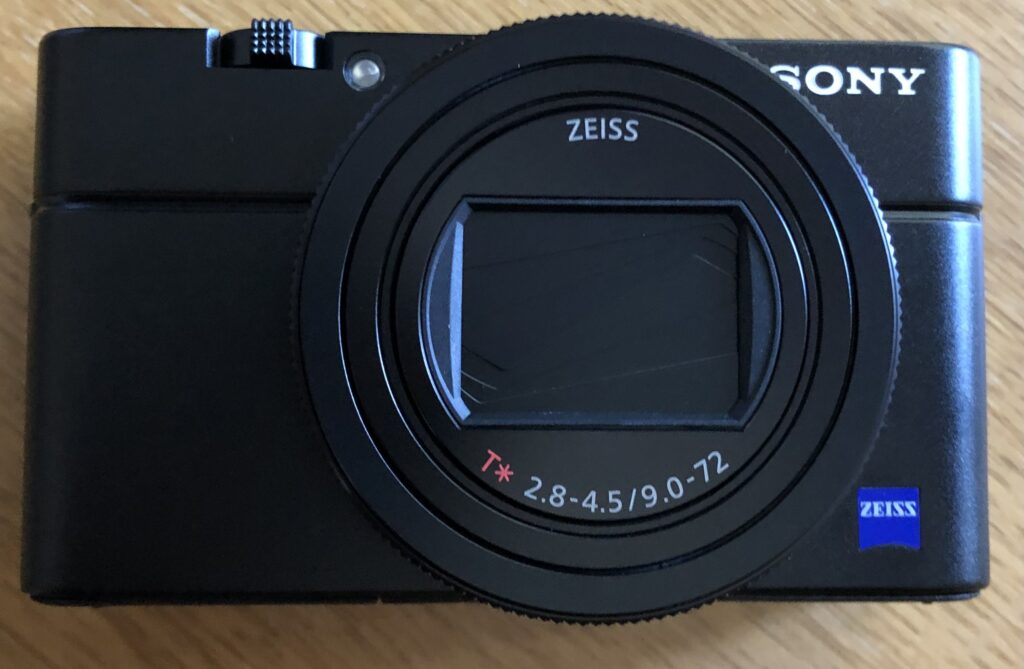
When I Need a Serious Zoom: Sony RX100 VII
- Sony RX100 VII Amazon USA: https://amzn.to/4y86VKZ
- Sony RX100 VII Amazon UK: https://amzn.to/4cLaxu6
There is one important weakness with all those tiny wide-angle cameras: zoom.
That becomes a much bigger issue on my expedition trips. For example, in Antarctica where the whales, seals, penguins or interesting scenery may be a distance away.
That is when I take my Sony RX100 VII.
This remains one of my favourite travel cameras of all time because Sony managed to put a 24–200mm equivalent optical zoom into a genuinely compact camera with a one-inch sensor.
That 200mm reach makes an enormous difference when filming wildlife. The shots I get are amazing
It also produces excellent image quality and copes well in low light. There is one issue, though.
I don’t find its video stabilisation anywhere near as effective for handheld filming as the Osmo Pocket. If I am zoomed right in, even tiny hand movements become obvious. So, I always use my RX100 VII with a small GorillaPod.
- Joby GorillaPod Amazon USA: https://amzn.to/3Stn0fb
- Joby GorillaPod Amazon UK: https://amzn.to/4gUUhsW
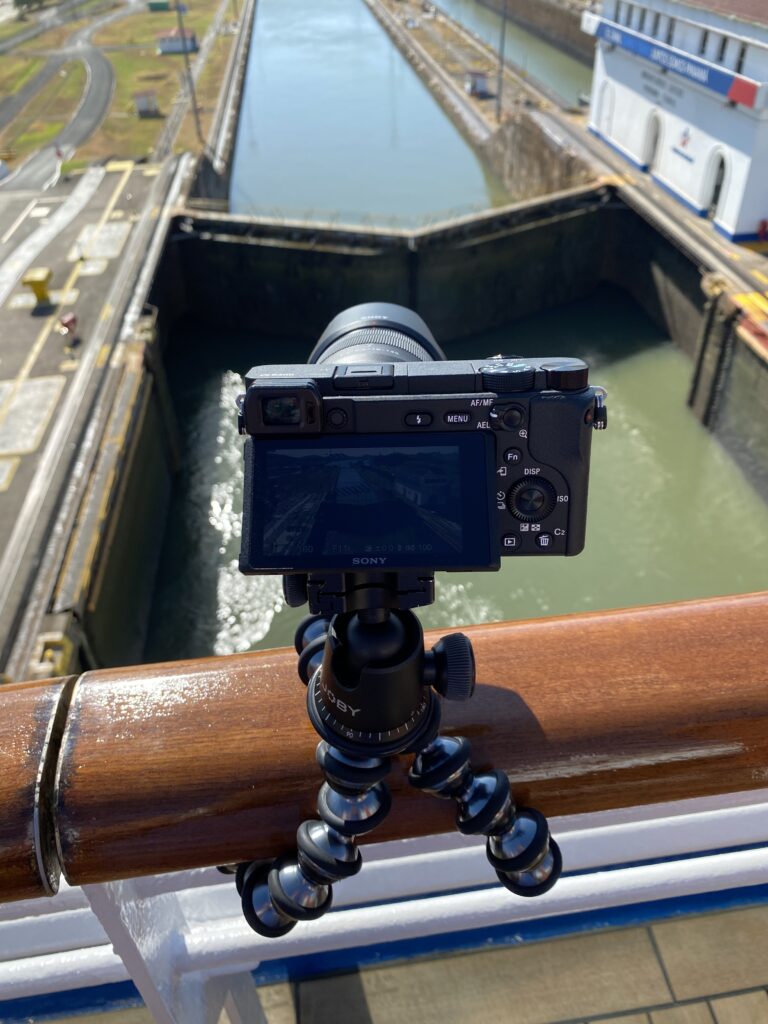
That gives me a remarkably capable wildlife and expedition setup which is still small enough to carry around all day.
Another issue is Sony have stopped making this camera series, and while you can still find some online or in some photography shops, there is no direct alternative in their range, and most photography experts say the best alternative is the Panasonic Lumix ZS200 (TZ200)
The Camera I No Rarely Travel With: Sony A6400 + 400mm Lens
- Sony A6400 Camera Body Amazon USA: https://amzn.to/4d4M1nO
- Sony 400mm lens Amazon USA: https://amzn.to/4zKfVaN
- Sony A6400 Camera Body Amazon UK: https://amzn.to/4i0ra8D
- Sony 400mm lens Amazon UK: https://amzn.to/4cdXDVj
I also own a Sony A6400 and a 400mm lens (a long zoom!), and this shows just how my approach to filming has changed.
It is an excellent camera setup and gives me much greater reach than the RX100 VII.
But I usually don’t take it travelling anymore.
The A6400 body itself weighs around 403 grams with battery and memory card before you even add a lens. Add a large telephoto lens, batteries, accessories and something substantial enough to support it, and suddenly I am having to carry a big and heavy piece of kit.
I increasingly found myself asking whether the extra size and weight justified the relatively small amount of footage for which I needed it. For me, the answer became no. So, mostly I use the RX100 VII (or even my iPhone 17) and accept the shorter zoom.
That is probably the biggest change in my filming philosophy. I used to think better filming meant taking more equipment. Now I am constantly looking for ways to take less.
What I Use in My Studio
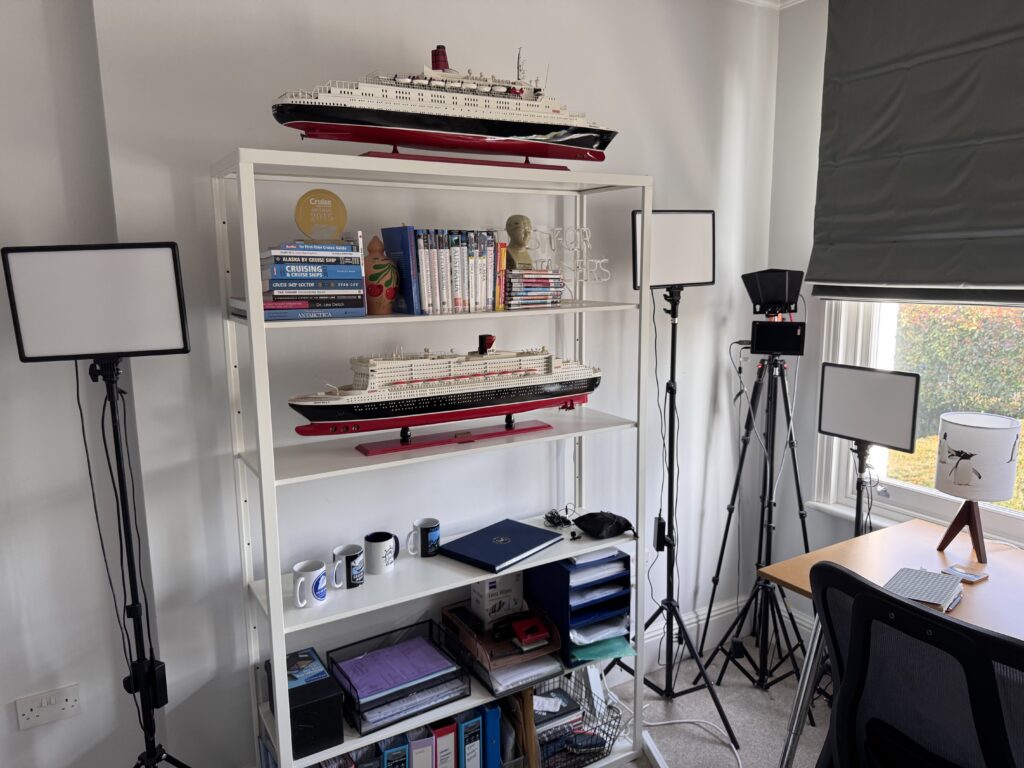
I haven’t abandoned my Sony A6400 completely, though.
The main “Welcome aboard, I’m Gary Bembridge” pieces to camera you see in my Tips For Travellers videos are filmed using the Sony A6400.
In my home studio, the disadvantages of a larger camera disappear. I don’t have to carry it anywhere; I leave everything set up permanently ready to shoot my to-camera pieces.
For sound I use a RØDE Wireless GO microphone system, which allows me to have the microphone close to me without having a cable running from me to the camera. RØDE designed the Wireless GO specifically as a compact wireless system for applications including on-camera presenting, vlogging and YouTube filming.
- RØDE Wireless GO Amazon USA: https://amzn.to/3UZcLzT
- RØDE Wireless GO Amazon UK: https://amzn.to/4ceAp1p
And audio is something I would encourage anyone starting a YouTube channel not to overlook. Viewers will tolerate surprisingly imperfect pictures, but poor, echoey or difficult-to-understand sound becomes irritating very quickly.
The Biggest Lesson from All My Camera Gear
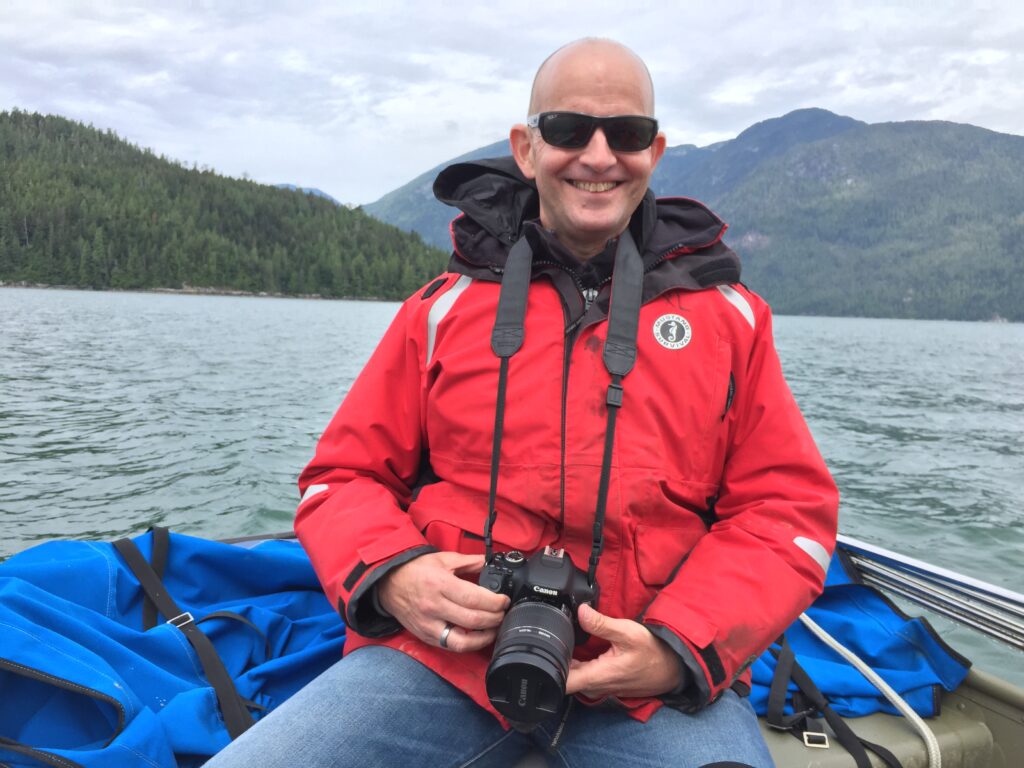
What strikes me most when I look at this list is not how much equipment I use. It is how little I now need. Technology has completely transformed travel filmmaking. I don’t go out filming with bulky camera gear like in the photo above any more!
And, fortunately for my back and my luggage allowance, those cameras seem to keep getting smaller – and better!
Affiliate disclosure: Some links on this page are affiliate links. If you purchase through one of these links, I may receive a small commission. You pay the same price, and it helps support Tips For Travellers.
Sign up to my Newsletter and never miss another post, and also get bonus tips, content, and offers not posted on the blog
Free and Premium Perk Options

Discover more from Tips For Travellers
Subscribe to get the latest posts sent to your email.

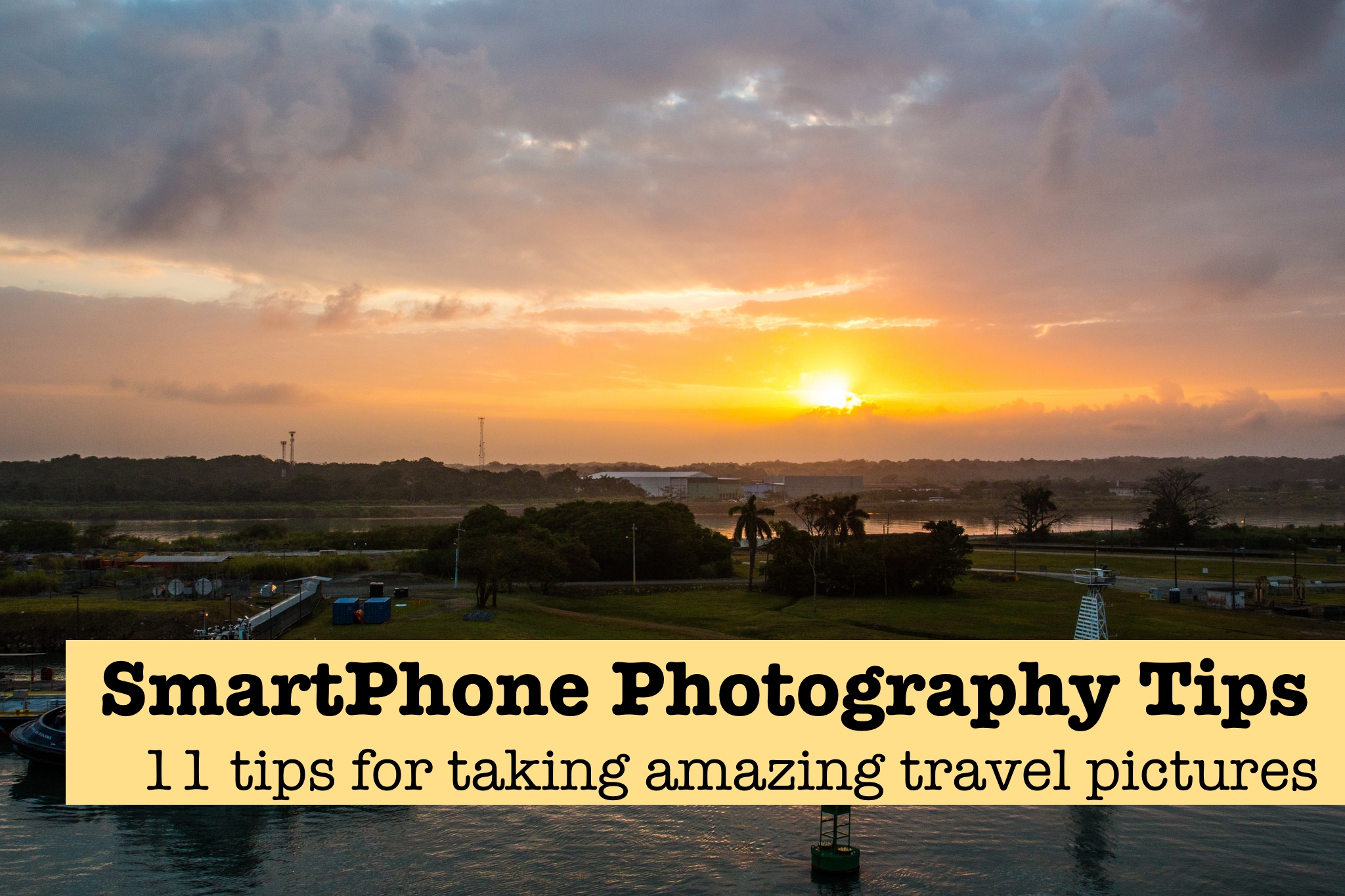


Ha ha. That “invisible” selfie – stick needs to update its software to also hide the shadow thrown by the stick 🙂