7 Traps I See People Cruising South America Fall For
 South America Cruise Tips: 7 Traps I See People Cruising South America Fall For
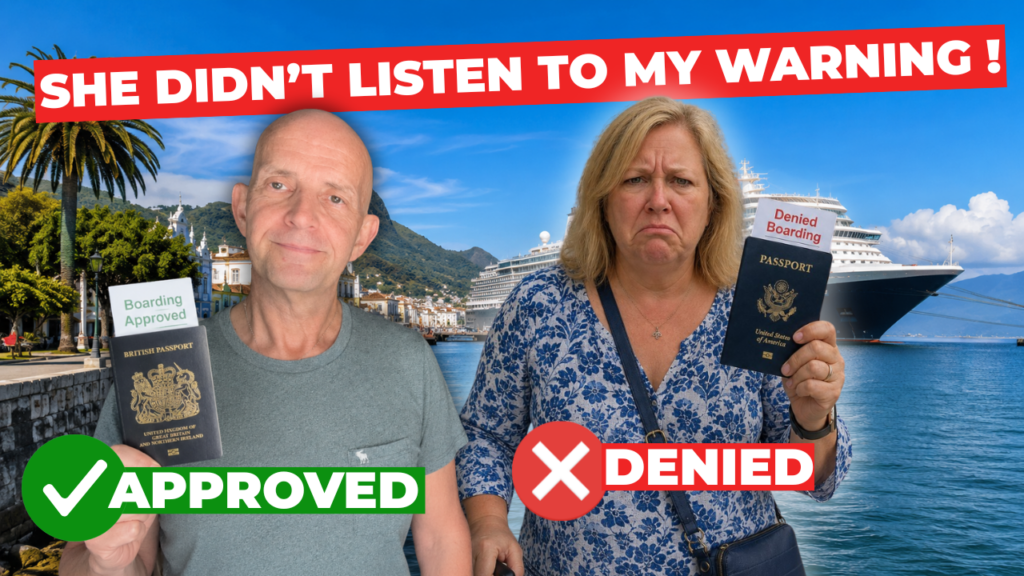
A few days after my Holland America South America cruise successfully departed from Buenos Aires, 150 cruisers from the United States and Canada were stunned when they were denied boarding there by Celebrity Cruises for their South America cruise. Not only losing the entire cost of their cruise, but they also had to scramble to find ways to get home at their own cost without any help from the line.
They were all experienced cruisers, cruising the Caribbean and Alaska frequently. But as they discovered, as I have warned before if you approach South America the way you do cruising in those other regions things can unravel fast.
Welcome aboard, I’m Gary Bembridge and I’ve cruised South America twice, once for 14 days and most recently for 31 days, and I’ve spotted seven mistakes, including the one I’ve just mentioned, that even experienced cruisers like you make sure you avoid making.
So, why were those 150 cruisers denied boarding?
Rules Mistakes
They got it wrong by not staying on top of the constant changing rules and restrictions in South America.
In their case, Brazil had recently introduced a rule requiring US and Canadian citizens to have a visa to enter the country, and because their cruise was going there, anyone that didn’t have one was denied boarding – and at their own cost.
While some claim they had called Celebrity Cruises’ customer service who had said they didn’t need one, that was irrelevant and disregarded by the line as cruise line terms and conditions state it’s entirely up to us, passengers, to make sure we have any visas required when cruising.
Lines will not give any compensation nor refund fares if denied boarding either.
In this region, as I’ve discovered myself, there can be sudden changes in rules and travel guidance, and you need to stay on top of it.
For example, 15 days into my recent cruise, due to political troubles the UK foreign office advised against any travel to Manta Ecuador where we were docking, while the US State Department were just advising more caution. The UK government advice meaning that if I got off in Manta against that no travel advice my travel insurance could be invalidated. So, I cancelled my excursion and stayed on the ship.
Also, between my last and latest trip countries have clamped down on taking food off in port. In Chile, they’d even introduced an online declaration that created a QR code I had to have on my phone to show on request in every port and they’d added $100 fine for every item brought on land.
Unlike my last trip, I found on my latest a strict requirement to have Government Issued photo ID when getting off in port. As, you won’t have your passport, because you hand that in so the line can do immigration checks in each country, bringing a photo ID like a driver’s licence has become essential.
This all shows how important it is to stay on top of, even during the cruise, any rules and guidance in this changeable region.
But let’s step back now and talk more about the mistakes I see with cruise choices and in port plans.
Wrong Cruise Mistakes
I see many people choosing the wrong cruise for them.
All cruises here are longer, the shortest is around two weeks, and a full South America circumnavigation can take up to 70 days.
The most popular, and the one that I recommend for first timers, is the two-week Santiago to Buenos Aires option that passes Cape Horn and covers the bottom half of the continent.
Why?
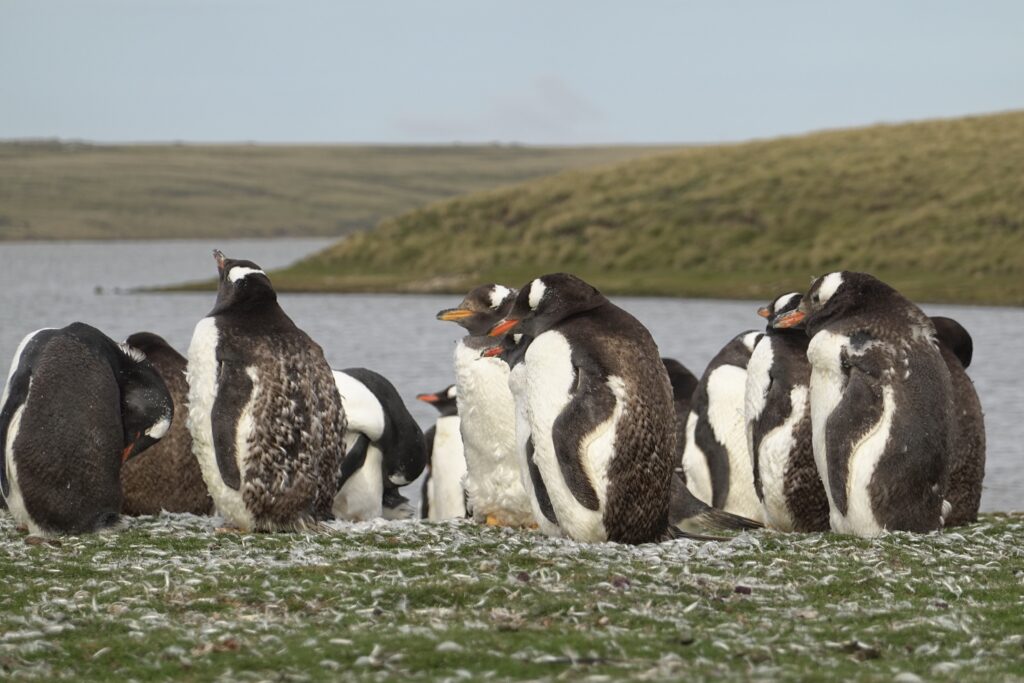
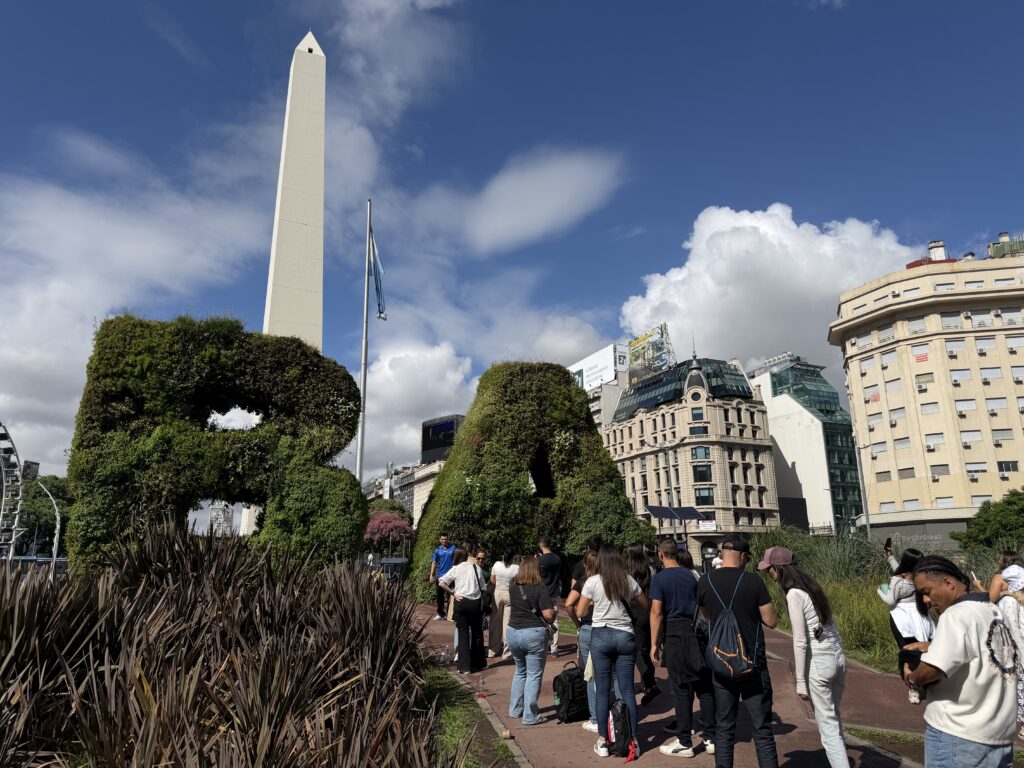
In that relatively short time, you can see many iconic places and sights. Gorgeous Buenos Aires. Penguins in the Falklands. National Park near Ushuaia. Glacier Alley in the Chilean Fjords. Historic Punta Arenas. Some even include an Antarctica Peninsula sail-by. You can then add pre- and post-stays to see the incredible Iguazu Falls or Machu Picchu.
A total circumnavigation, or as I did, a 31-night partial circumnavigation, is fantastic too as you get to see the upper half with sights like Rio, Amazon, Nazca Lines and Lima in Peru, or even like I did take an off-ship excursion to Machu Picchu or as others did The Galapagos. And you get to transit the Panama Canal.
Some other typical cruises are an East Coast from Florida to Rio, or a West Coast through Panama to Lima. And of course, there are expedition cruises in South America, that I’m not going to talk about here, like Patagonia, Galapagos, and Antarctica.
However, I have seen even when people choose the right itinerary for them, they make a mistake of not checking and digesting one big specific issue with any South American cruise. Sea days.
Sea Day Mistakes
There are a lot of sea days cruising South America as the distance covered is enormous.
On my first cruise, a 14-day cruise from Santiago to Buenos Aires, we only had seven ports. On my recent 31-day cruise, we only had 13 ports, though we did have an overnight in Buenos Aires and two in Lima.
But I see many people struggle with the sea days. Why?
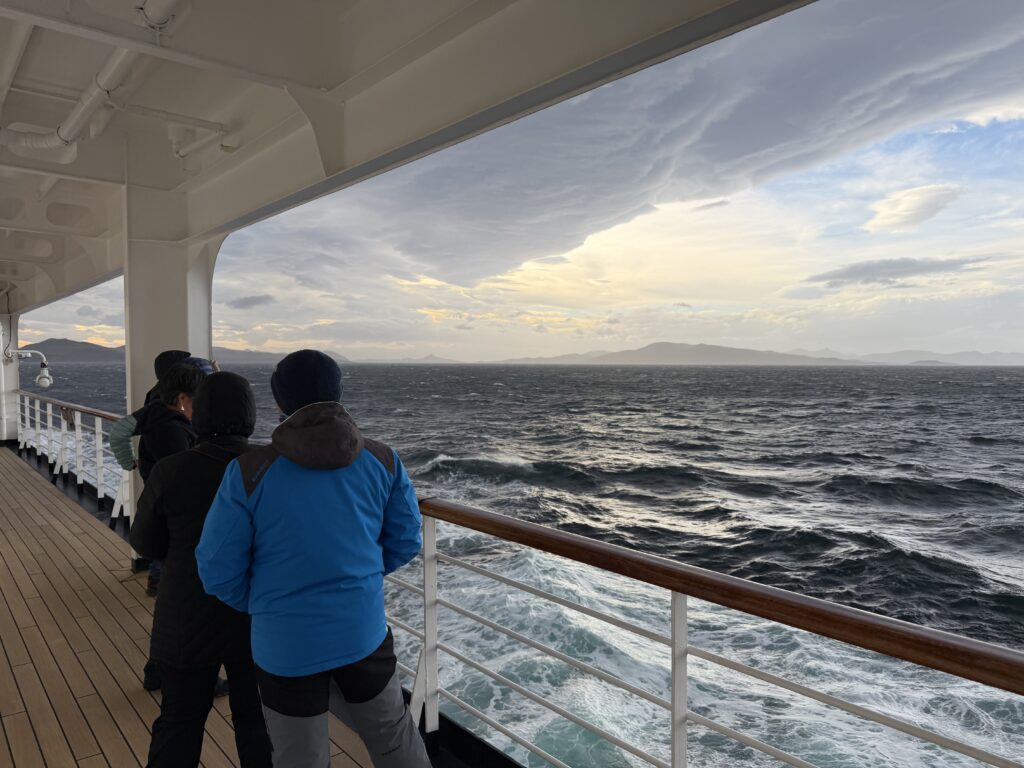
First, the seas in the lower half of South America can fairly rough due to wind and swells. I saw many people weren’t expecting nor prepared for this. They had only expected choppy seas when passing Cape Horn which is renowned for it.
On both trips, we had bumpy seas from Buenos Aires via the Falklands to Ushuaia, and even up the coast of Chile when outside of the fjords. Outside decks were sometimes closed because it was too windy, production shows rescheduled on my first trip, and the pool emptied occasionally on both trips.
The second area I saw people struggle with the number of sea days, was around entertainment.
Many of the cruise lines sailing South America, like Holland America I went on for both, focus on enrichment when here, and so daytime events are heavy on port talks, regional immersion talks and events like local music performances, dance classes, and cooking demonstrations.
So those who weren’t really into that, found the many sea days tedious.
So, it is important when choosing a line to understand there’s a lot of sea days and to must make sure that line is going to have a daily program of sea day activities that will keep you entertained.
However, on the upside, one mistake people make about sea days is not appreciating that sea days will sometimes be as fascinating as the ports.
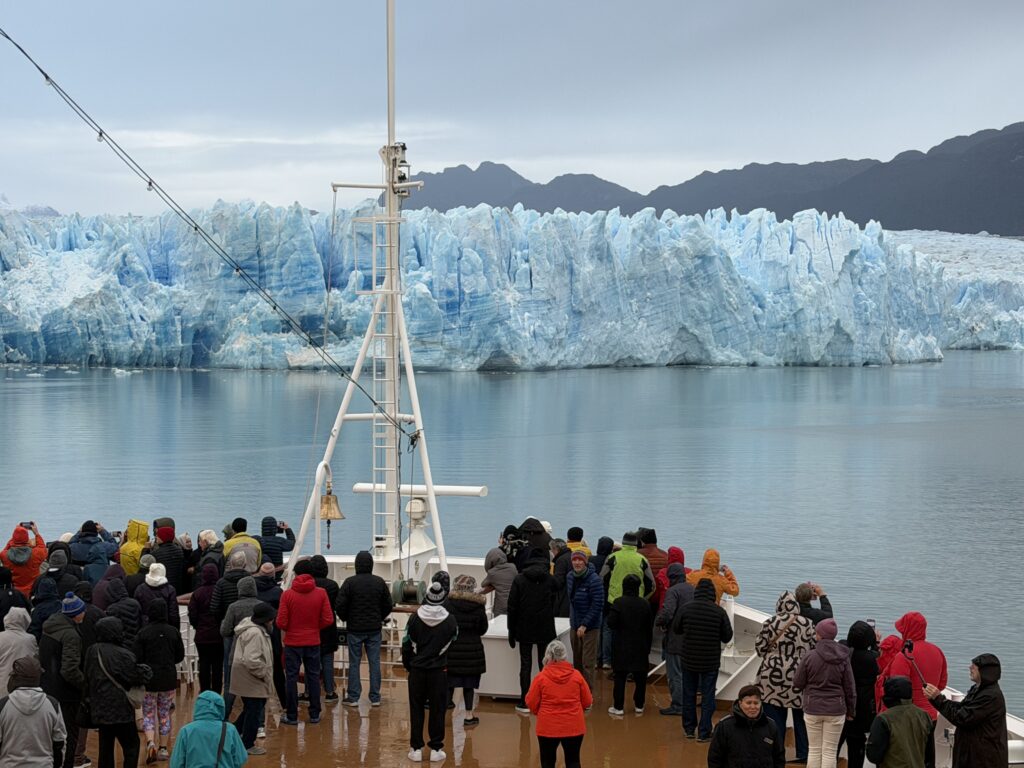
For example, on both cruises I went into the Chilean Fjords to cruise Glacier Alley, a series of 5 stunning glaciers, visited Brüggen Glacier, the biggest glacier in the Southern Hemisphere out of Antarctica, sailed around infamous Cape Horn, and past a shipwreck in Sarmiento Channel.
But when it comes to the ports themselves, I see people make the mistake of not understanding the nature of the ports called into.
Port Mistakes
South America ports, unlike the Caribbean, Alaska, and many European ports, are almost all working container or fishing ports. They’re not attractive, often with little to see and do close to them.
Being working ports I found myself looking at containers, freight ships, or fishing ships being unloaded, and in most you can’t walk off the ship and must use a shuttle to and from the ship to a cruise terminal or port entrance.
This makes embarkation and disembarkation in places like Buenos Aires, San Antonio, and Valparaíso (the two ports that servicing Santiago) and Lima more challenging as the terminals are far from the ship and you are bused to and fro.
Also, as working freight ports, they are very mixed in terms of cruise passenger facilities.
While there are modern cruise terminals in places like Buenos Aires, and even Manta, Ecuador, most have temporary gazebos or small service buildings with limited facilities.
Added to that, these working ports are often in areas that are not particularly safe to walk around, with warnings not to do so from the line.
And certainly, unlike the Caribbean and Alaksa, there’s usually little or nothing of note to see within walking distance or close to the port.
Most are just gateway ports to sights and attractions further inland. So, if you’re the sort of person like me that prefers self-exploring or strolling about, you may find many ports limiting.
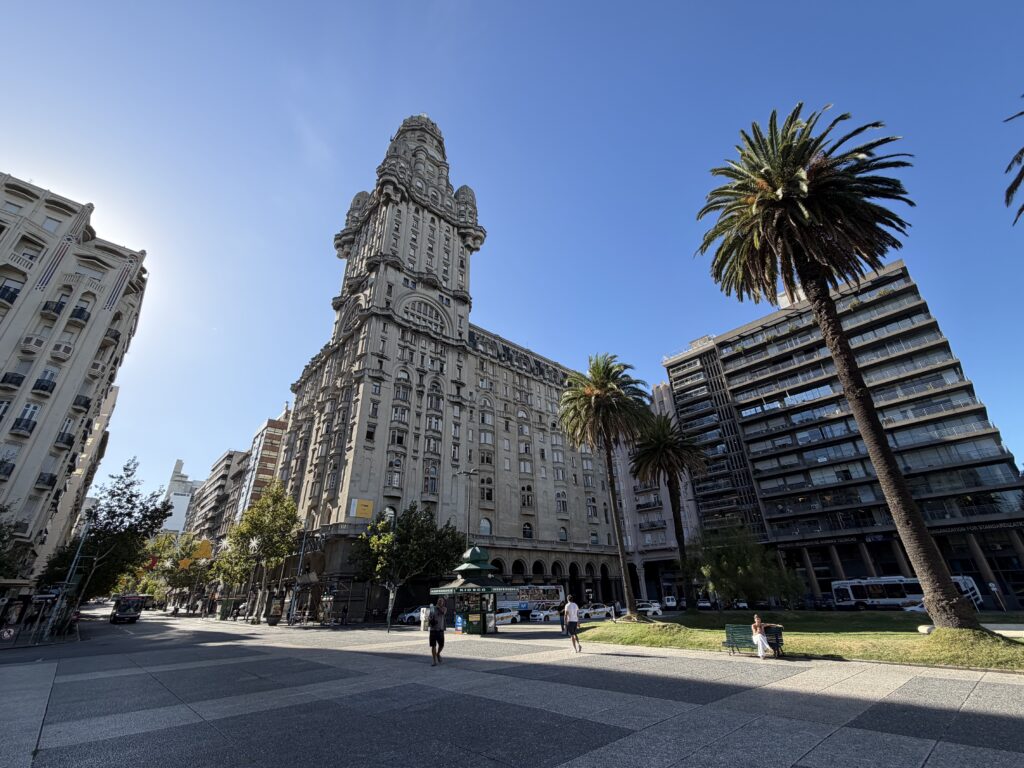
There are a couple of exceptions. For example, Montevideo is safe around the port with a Carnival Museum and fantastic food market across the road, and a 20-minute walk into town, with beautiful sites and Independence Square. Port Stanley, once you’ve got the tender, you can walk around the rather quaint little town. Ushuaia, you can walk into the town. Punta Arenas, you can walk in and look at various small museums there.
By the way, there are usually one or two tender ports. On my latest cruise, that was in Port Stanley in the Falklands, and Puerto Montt Chile.
So tender ports are at risk due to those weather-related sea conditions. For example, on my first trip, we were only one out of seven of the Holland America cruises that season that successfully tendered into Port Stanley.
But the limited ability to self-explore and key must-see sights not being close to the ports leads me to another area I saw so many people get wrong. Excursions.
Excursion Mistakes
Because people expect to self-explore, most don’t budget for nor plan ahead far enough for excursions.
More than any other region I have cruised in, I feel that excursions are key to getting the most of South America, because the must-see sites are further away from the port, and relying on public transport or even taxis is challenging.
I also found that excursions have more limited capacity because the infrastructure is still building up – and they are costly.
In my first two-week trip, I spent $1,200 on excursions, and I spent over $2,000 on excursions on my most recent trip, excluding the off-ship excursion to Machu Picchu, even by not doing one in every port. Many excursions cost $200 and upwards.
I also only used cruise line excursions. Why?
In ports there aren’t independent tour operators dockside, which there are in other regions, and I my usual go to third-party and cheaper independent providers, like ShoreExcursionsGroup.com, VentureAshore.com, and Viatour.com, had few options and none in many ports.
Some people I met found some success finding individual guides though ToursByLocals.com.
So, I was more reliant on cruise line excursions than usual but did have the reassurance of waiting if delayed getting back from those further away sights. In fact, the ship did have to wait in Salaverry Peru for a delayed line excursion.
I have a video dedicated to must-see sights, excursions and their costs by port, more on that later, but here is a quick flavour of what to expect to see cruising South America.
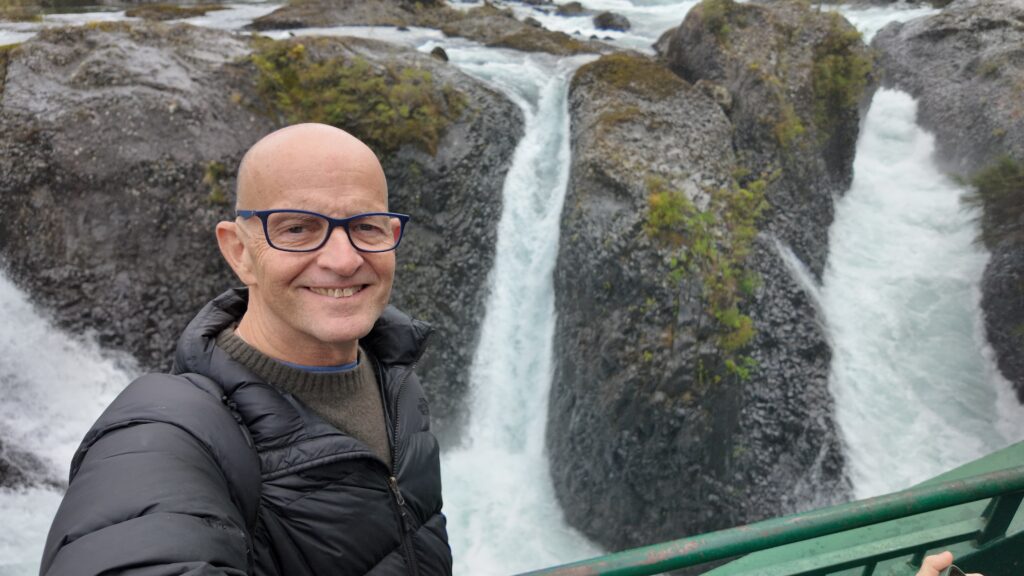
In Port Stanley, you can see penguins. In Ushuaia, you can get the fascinating ex-convict train through the National Park. In Punta Arenas, you can visit Magdalena Island to see nesting penguins. In Puerto Montt, you can go to Lake Los Todos, see snow-capped volcanos and the Petrohué Falls. In Coquimbo, you can visit historic lighthouses and markets. In General San Martin, you can fly over the mysterious Nazca lines.
In Callao, Lima, you can even take a two night off ship excursion to Machu Picchu. Though that will cost upwards of $4,000 to do.
But also avoid the mistake many made, you must plan and book excursions before you board. I couldn’t believe how many of the ports were all or mostly sold out of excursions when checking on embarkation day.
Also, as there is often just one or two main sights at a port, they can get rather busy, especially if there are two or more ships in that day.
For example, at the Petrohué Falls near Puerto Montt, I think there were at least 500 people just from the Holland America ship all there at once.
But even after choosing the right itinerary and relevant excursions, there is a something I saw so many people get wrong on both trips affecting their enjoyment of both because they had not appreciated or checked on one key factor.
default
Weather Mistakes
And that is the impact of the weather, made worse by many people badly mispacking as a result.
The South America cruise season mostly runs from November to March, the region’s summer period.
So, most people, me included the first time, think of sun and heat.
But that is not the case for much of the trip. For while places like Buenos Aires or Santiago where I boarded my trips it was sunny and around 30C (86F), once down in the south like Port Stanley, Ushuaia, Glacier Alley, and even Punta Arenas it was only around 7C – 9C (44F – 48C).
When I look back at my photographs, I have pictures of me in the south with woolen hat, big jacket, scarf, and gloves, then as we head up the continent that evolves to a less warm jacket, and eventually to short-sleeve shirt, shirts, cap and sunglasses.
And it was unpredictable with rain and sunshine all in one day. I was glad I had packed a good raincoat.
So, you need to be prepared that weather may mess with your excursions.
For example, on my first trip to Lake Todos los Santos I had blue skies and clear views of the volcano, this trip it was shrouded in clouds and invisible. While on my first trip, low clouds and rain made seeing the glaciers in Glacier Alley difficult, this trip was clear and beautiful skies.
Money Mistakes
Another area where I saw people got it wrong out in port was around currency. And this is another example where things are changing fast in the region.
When I went a couple of years ago, it was essential to have local currency to buy things in port, from vendors or pay for taxis. So, I needed currency for Argentina, Chile, and Peru.
That’s changed.
First there is much more use of US dollars with vendors, people linked to the tourist areas, and taxis willing to take these. And many more were taking cards and Apple Pay. Even some of the vendors.
So, first time I didn’t take enough currency, this time I took too much local currency.
However, there is a big watch out when it comes to using US dollars. People will not take damaged bills. The guide told me that often people will give her damaged bills as a tip, and people may as well give her monopoly money. Banks will not take damaged US Dollars, so they cannot change it to local currency.
I saw a stall holder turn down a sale of $70 because people were trying to include damaged bills as the payment.
Sign up to my Newsletter and never miss another post, and also get bonus tips, content, and offers not posted on the blog
Free and Premium Perk Options

Discover more from Tips For Travellers
Subscribe to get the latest posts sent to your email.