133 Cruises Taught Me These 5 Cruise Mistakes To Avoid
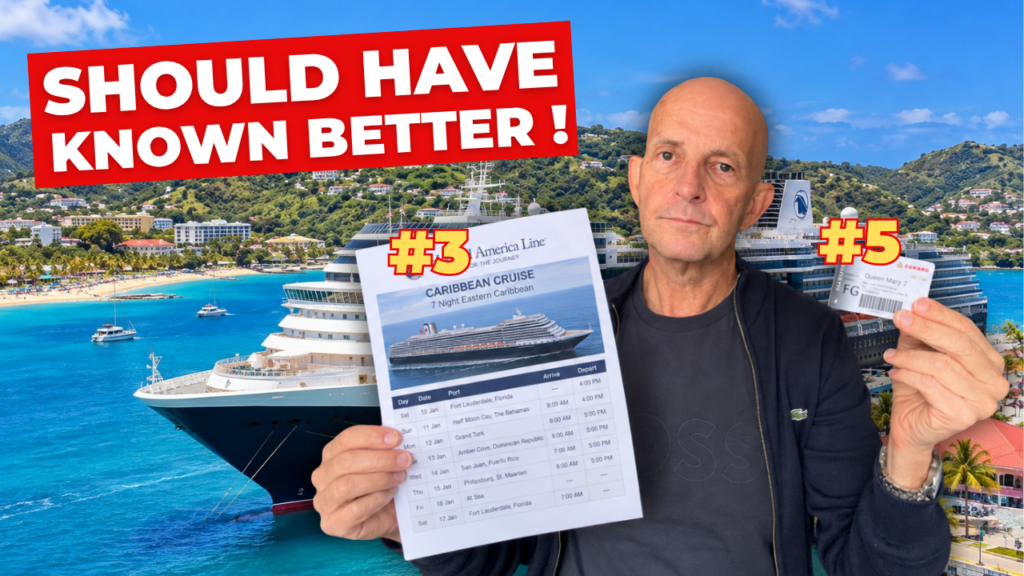 133 Cruises Taught Me These 5 Cruise Mistakes To Avoid
With 133 cruises to date at the time of making this, you would think that all that experience means I know exactly what I’m doing and how to avoid pitfalls, but it does sometimes have the opposite effect – as I think I know so much I forget to do THE most important thing before very cruise – as you will hear shortly.
Welcome aboard. I’m Gary Bembridge and recently I learnt the hard way that no matter how much experience I have, I still must do my research for every cruise.
I wanted to try a sailing ship experience. So, I booked Windstar Wind Surf because I’d seen their ships with magnificent looking sails in ports and assumed it was going to give me the unique wind-powered sailing experience I craved to try.
But it was only once on board I discovered it’s not a true sailing ship. It’s a sail assisted motor yacht, and the sails help reduce fuel and increase the speed. So, if I had done my research instead of making assumptions, I would not have wasted money on it – as I still need to go on a proper sailing ship to have that experience.
Assume Things Will Be The Same
It reminded me to treat every cruise as if it’s my first cruise. Increasingly key because also cruise lines are constantly changing things these days.
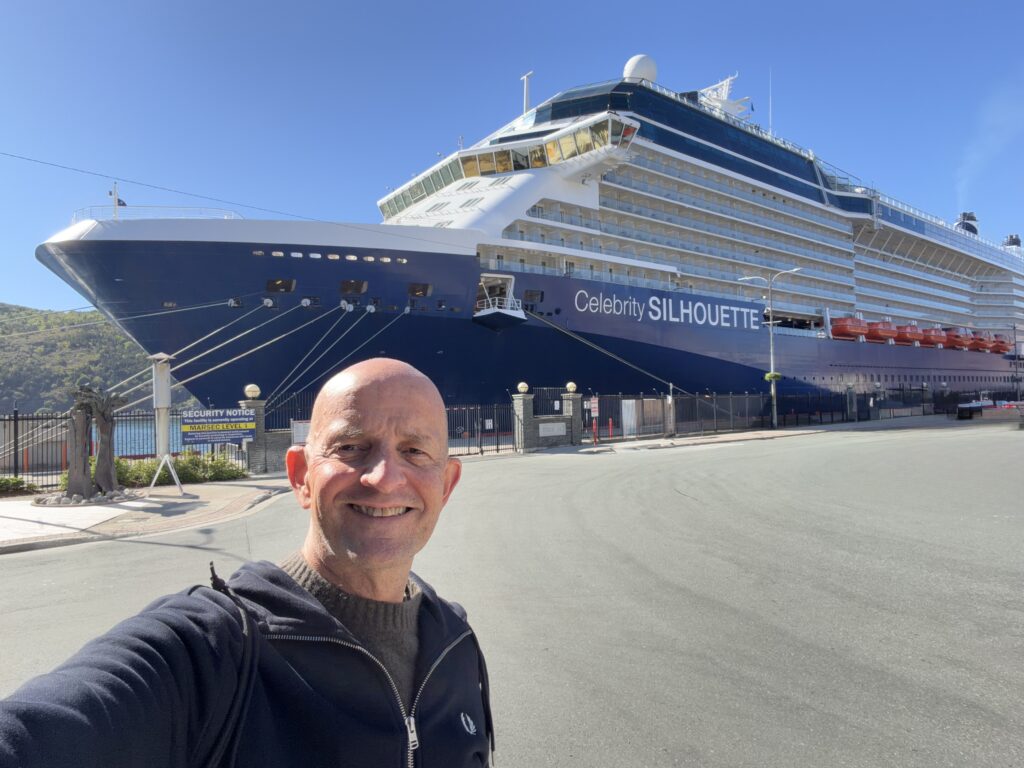
Like what is and isn’t included in the fare or within their packages. I recently went on Celebrity Cruises and in the space of 6 months between trips they had slashed what was included in the “Premium Access Package” removing perks I valued like the embarkation lunch and reserved seating in the theatre.
And ships keep changing as lines constantly change and update existing fleets.
For example, I went on Holland America Oosterdam and returned nine months later to find The Retreat which I loved had gone, one of my favourite bars had been turned into a casino, the classical music partnership I enjoyed had been ended, and their partnership with Rudi Sodamin in the specialty dining had been changed to Morimoto.
And now a year later, they have made even more changes adding more cabins including solo ones, as well as adding new venues like Grand Dutch café, restaurants and revamped the pool deck.
I am just back from Regent Seven Seas Splendor, a ship that I was on six months ago to find changes too. It had added a casual dining restaurant in the evening that it did not have before. And soon they are reconfiguring the ship to change capacity and cabin grades.
It’s not just those lines, Cunard and Celebrity have said they are reworking existing ships too. I cannot assume a ship I know, and love, will be the same and must check every time.
Other Ways To Cut Cost of Cruising

default
Another big learning is there are many ways to keep cutting the cost of cruising even after grabbing one on a good deal.
One is by fare price tracking and asking the lines to match it if they lower prices for my cruise. I have an article on my blog showing how to do this easily. Find out more at TipsForTravellers.com/faretracking
Another trick I use is the friend referral scheme that some lines offer.
Some lines give discounts or extra onboard credit if a friend or family member person gives them my loyalty club number when they make a booking and go on their first cruise with the line.
I’m going on a costly Silversea cruise next year, but through new to Silversea cruisers naming me as their referrer, I’ve already had $2,000 taken off the cost of that cruise.
I have booked a repositioning cruise on Crystal and because I referred someone, got an additional 5% off the cost of that cruise.
Also, by being members of some clubs and associations one can get further discounts.
In the USA there is the AARP, which for a small membership fee, many cruise lines will give an extra discount.
My sister-in-law who is a nurse gets what’s known as “Blue Light” extra discounts off her fare, or in the USA they are called “First Responder” discounts.
Friends of mine who work in the travel industry get what’s known as “interline fares”, which are heavily discounted rates for people in a wide range of related jobs including airline crew, travel agents and so on.
I also reduce the costs of my cruises through the growing number of status matching loyalty programs.
For example, I have Gold status with Regent, part of the Norwegian group, and I could status match on their sister line Oceania cruise and I got $600 in onboard credit, which then covered the costs of my added drinks and excursions on my recent trip.
Also, because I can status match my Celebrity status when I went on my last two Royal Caribbean cruises, I got daily drinks coupons, which meant I didn’t have to buy an expensive drinks package, which drove down the cost of the cruise.
Then of course, holding shares in the cruise groups gets added on board credit too which helps cover costs.
I constantly keep looking for ways that I can drive down the cost of the cruise after booking, and do not see getting a good deal as the end of that.
Loyalty Is Not All It’s Made Out To Be
There is another big learning about building loyalty status I have made beyond status matching.
When I first started cruising, I thought the safest option and way to get the most from cruising was by sticking with a cruise line I knew and liked, but I didn’t know what I was missing out on and being loyal ended up costing me a lot.
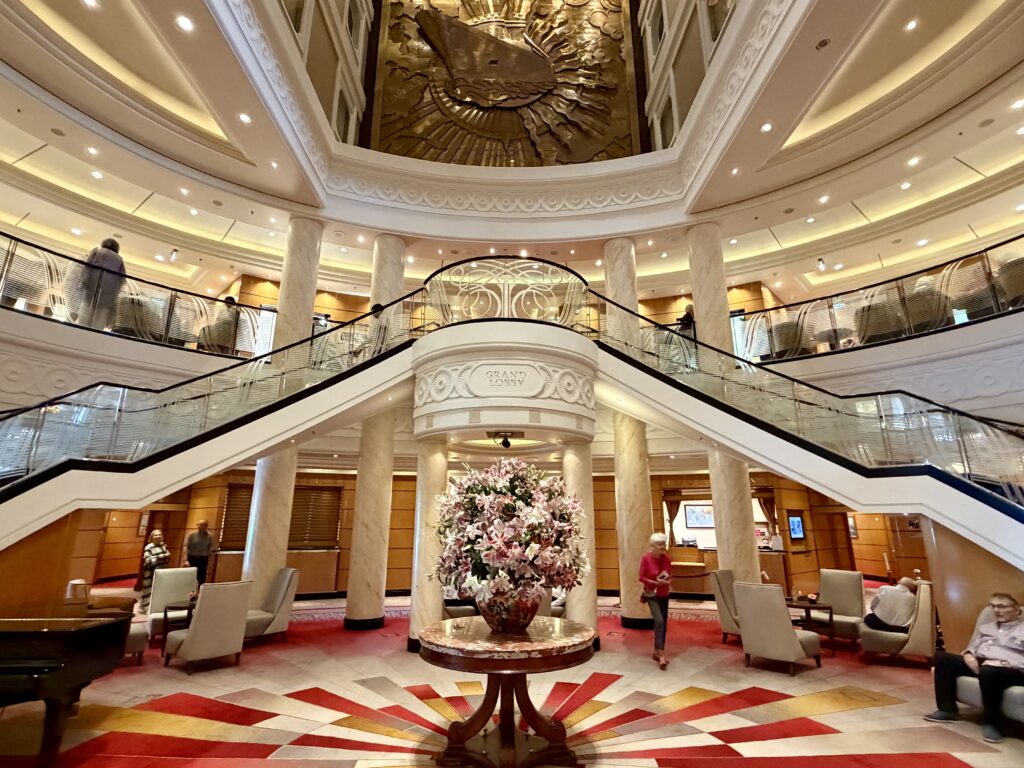
My first cruise was on P&O Cruises and as I liked it when I wanted to go cruise, I’d get out their brochure and book an itinerary that appealed to me. I only switched from them when I wanted to go on a transatlantic crossing on the iconic Queen Elizabeth 2 before it was retired.
I liked the Cunard experience so then I would just look at what Cunard were offering and book that, even a seven-week trip as part of a Queen Victoria world cruise.
But I now realise that loyalty was a bad mistake because I could have gone on a similar trip with more ports in a better cabin on a more upmarket line and for much less than I had paid.
It was only through starting this channel, that I began trying different cruise lines and quickly realised what I was missing out by being loyal.
Moving between lines was usually less costly, and I could see more.
In the Mediterranean, instead of just sticking with Cunard and by switching onto smaller ships like Azamara and Windstar, I went into the heart of ports like Marseilles, and into smaller Greek islands that their bigger ships could not go to.
On a Queen Mary 2 trip through Asia, we were docked miles away from the centre of Shanghai, and Ho Chi Minh City. But if I’d gone on a smaller ship, I’d been right in the heart of those cities.
Now I look first where I want to go to, and what line has the best itinerary and experience suited to that region.
Also in practice, loyalty programs are not that great and often what they include as perks can be covered by having a cheaper fare on another line.
Early on, I had diligently worked my way up through the Cunard program to the highest level. But the small discounts, one free specialty dining, and some free Wi-Fi are no a match for the savings I have now made moving around lines
Trying To See Too Much

One big mistake I made when I started cruising was thinking the goal was to see as much as possible in a port and that I should tick off in every port seeing the must-sees, the famous, and all highlights.
But I have since discovered that it’s better to focus on one or two things that will make it truly memorable, and just do that.
Early on in cruising encouraged by the way cruise line excursions are set up I found myself falling into a tick box mentality. How could I pack as much as possible in Rome in a day? How could I see both Florence and Pisa in a day? How could I get to every scenic viewpoint in a port?
I soon found that cruise line tours are too rushed. I’ve looked at the schedules the tour guides are given and the tight timings they have to stick to as the focus is on seeing as much as possible.
I found there was too much time on buses, little chance to interact with the local people, try local food, and other than having some photos of famous sites. I did not have much of a memorable and life-changing experience.
What I’ve learned to do instead is pick something that has a chance of making a port memorable. This often means not going to see the most famous attraction and often comes from self-exploring.
The most memorable ports I’ve been to, for example, are in Kuala Lumpur where we didn’t go on an excursion. We found a taxi driver who explained to us actually there was an alternative to the famous Petronas Towers, which had great views across the city. We then got on Metro and got lost and discovered a food market that was magnificent.
In Tokyo, instead of going on a tour, we self-explored, worked our way around the Metro, stumbled on Pachinko stores, which is a mixture of pinball machine and slot machine and had an incredible experience, and then tried local food where we had to mime what we wanted and point to images on the menu because we were away from normal tourist areas.
I realised that seeing less often means experiencing more.
And linked to this, I’ve learned over time that while cruise line excursions may be the safe choice and convenient, with the reassurance of the ship waiting if delayed getting back, independent exploration transformed my port experiences.
So, I now approach each port as follows.
First, I ask if I can explore independently? Is the transport, infrastructure and the timing going to make sense?
So especially in well served tourist regions like the Mediterranean, Caribbean, and Alaska, I can walk off and do things like Hop-on Hop-off buses, and there are good self-touring infrastructure and taxis. I watch YouTube videos of the ports, as there are always people who self-explored off a cruise showing how, what to do and traps to avoid.
Next, if looks more daunting I look at independent excursion options with a guide and smaller groups than cruise lines offer. I start with sites like ShoreExcursionsGroup.com, VentureAshore.com, Viator.com and ToursByLocals.com.
By the way, if you use Shore Excursions Group, go to the link tipsfortravellers.com/shoreexcursions and put the code “TFT5” in at check out where it asks if you have a discount code and you’ll get 5% discount.
If these do not suit, only then do I use a cruise line excursion. Especially if the logistics or distances to sights make the potential or worry of missing the ship more stressful. So, for example if the place is far from the port like Paris from La Havre, La Spezia for Florence or Kobe or Osaka for Kyoto.
Not Going Direct
There is another learning, which often causes much debate and disagreement when I talk about it.
When I started cruising, I booked directly with the cruise line as I thought that was the best way to get the best price and advice. But I discovered it is not. Now, I always book through a travel agent.
I found that agents are never more costly than booking direct, as they are incredibly important to them, accounting for at least 70% of their bookings.
Often agents have better fares as cruise lines give them blocks of cabins to clear because they don’t want to advertise them at a lower price because people like me try and get them to price match when spotting them.
Many travel agents also add extra on-board credit or amenities too.
But also importantly, if an issue happens before, during, or afterwards, the travel agent can pick it up and run with it. Instead of having to phone customer service or write to customer service, they often have a direct way in and they can resolve issues.
That has been a big plus for me. For example, when there was a price cut by Azamara, my travel agent knew a direct way in and got me over a thousand dollars off the price. I didn’t have to do anything other than ask her.
They will also make sure you know and have the right visas, eTAs or other requirements sorted so you avoid being denied boarding for not having those.
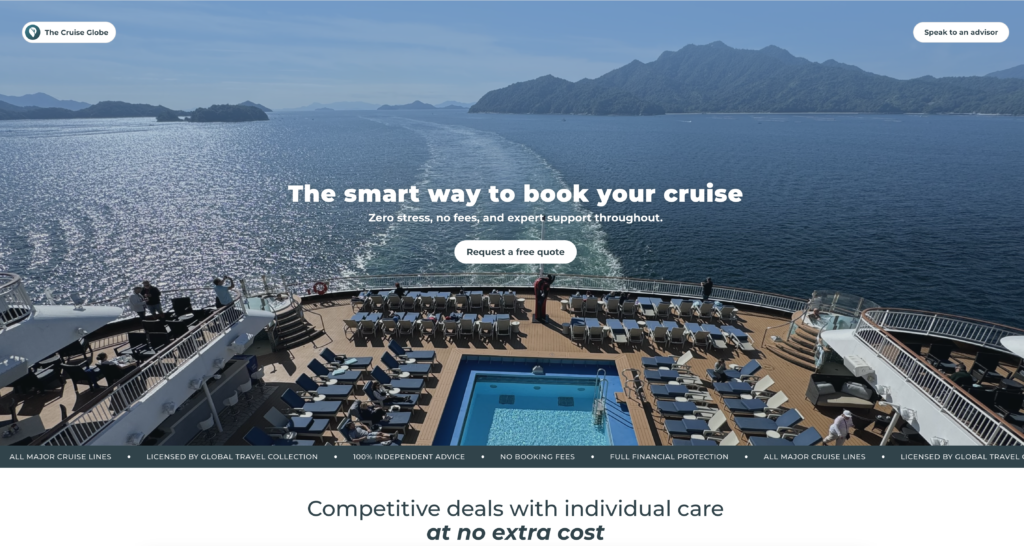
But, finding and using the right travel agent with fantastic cruise knowledge can be challenging, and so I have a recommendation. The Cruise Globe Travel Agency.
The Cruise Globe Travel Agency was created by my passionate cruise friends Matt Jones and Emma Le Teace (of Emma Cruises), and since they’ve launched, I’ve watched how their team handles bookings, service they give cruisers, and, importantly, the positive reviews they get from customers.
They have agents in the United States and UK and can book for most countries, and as well as seeking out the best itinerary, line, ship, cabin and fare for your cruise, they pro-actively watch for those fare drops I spoke about earlier.
Use my link TipsForTravellers.com/book to find out more and to submit a request about your next cruise. That’s TipsForTravellers.com/book or you’ll also find the link on the homepage of TipsForTravellers.com and in the description of this.
Another thing that I’ve learned through 133 cruises is a lot about cabins. Join me over in this article with things you should always do in your cruise cabin before unpacking – and why!
Sign up to my Newsletter and never miss another post, and get bonus tips, content, and offers not posted on the blog

Discover more from Tips For Travellers
Subscribe to get the latest posts sent to your email.


