Small Ship Luxury Cruise Line Comparison: Who’s Best?
Small Ship Luxury Cruise Line Comparison: Who’s Best?
In recent years, I’ve cruised on all five of the major small ship luxury lines, not just once, but multiple times on each. And whilst doing that I discovered so many things that most people misunderstand or do not appreciate about them. For while these lines are all lumped together by the industry into a category called “small ship luxury”, they deliver such different experiences.
Welcome aboard, I’m Gary Bembridge, and I’m putting them head-to-head, sharing my genuinely surprising findings about where each one shines, where they fall short, and who I think should – and absolutely should not – cruise on each of them and why.
But before picking the differences apart, I need to talk about what things they do share and why the industry lumps them together.
What is Small Ship Luxury?
The “Small ship luxury” category sits between what the industry calls “Premium Lines” and “Ultra-luxury Lines”
“Premium” being lines such as Princess, Holland America, Celebrity and Virgin Voyages with big ships carrying between two to four thousand guests and lots of add-ons to their fares.
“Ultra-luxury” including lines like Silversea, Seabourn, Crystal and Regent Seven Seas, with their smaller all-suite ships, very high crew-to-passenger ratios and the most comprehensive inclusions in their fares.
Even their pricing sits between those two worlds. On Premium Lines a balcony cabin costs from around US$300 per person per night, on these small ship luxury lines you’re usually starting $600, and then when you jump up to the ultra-luxury end, you’re looking at least $1,000 per person per night.
On thing I found is that all share is they are absolutely a step up from premium and a step down from ultra-luxury if you have been on those.
I also found and feel they’re aimed at cruisers who want to escape the bustle of big ships and move into a calmer, more adult, boutique-hotel-style experience with more interesting itineraries that the bigger premium ships are limited to.
As most of the ships carry around a thousand guests, although some are far smaller, it provides that quiet but also means they can get into smaller ports, dock in city centres that big ships can’t, like Marseille or Shanghai, and they tend to offer more overnights.
Food and service is better than premium, the vibe is more grown-up, with two of the five being adults-only, but there are a couple of things that catch people out when they first upgrade from premium lines.
For example, dress codes are far more relaxed, often no gala nights at all, jeans and smart trainers are fine in the evening on most, and entertainment is not a strength. I found on all small production teams doing low-tech themed shows, plus trivia and quizzes, but the real focus is on enrichment, talks, craft classes, digital training, bridge classes, and libraries.
Where they differ from ultra-luxury is that most carry many more passengers than those lines, so they’re noticeably busier, the service is less personalised than on ultra-luxury, there’s also a wider range of cabin types including inside and Oceanview, and fewer inclusions.
But, if that is what’s the same, let’s look at the differences by line, starting with Oceania Cruises which is part of the Norwegian Cruise Line Holdings group
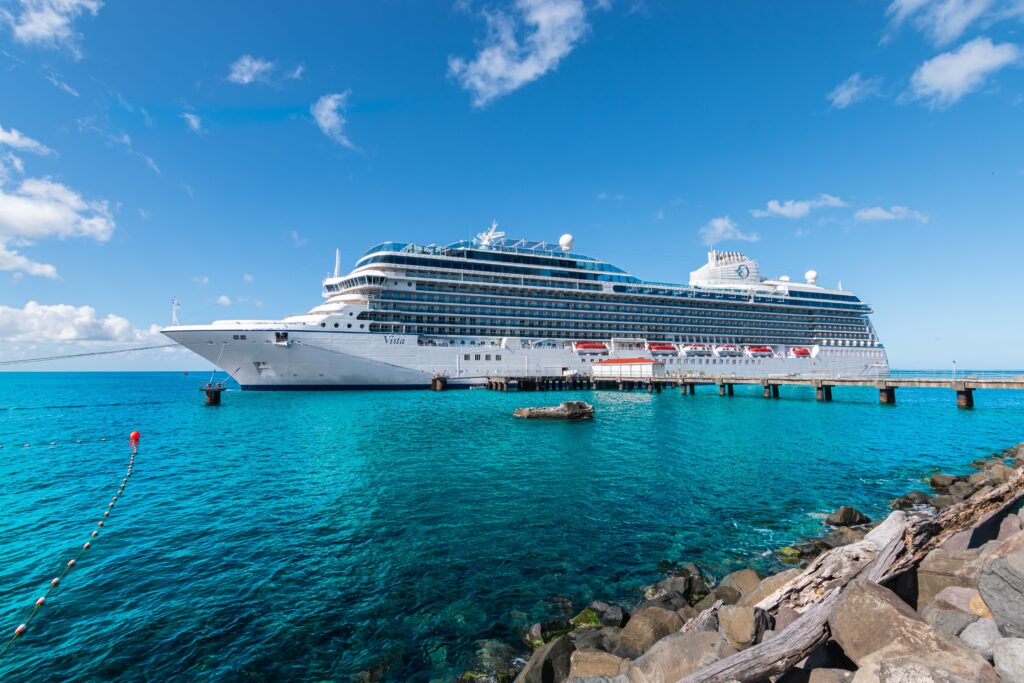 Oceania Cruises
Oceania is best known for and has built the line around food. They have even trademarked the phrase “The Finest Cuisine at Sea” and they back that up with the most dining choice in this category.
On their bigger ships, in addition to a Main Dining Room, Buffet and Pool Grill Casual Dining that all their competition offer, they have four speciality restaurants: Red Ginger (Asian), Polo Grill (Steakhouse), Toscana (Italian) and Jacques, named after their long-standing culinary partner Jacques Pépin, whose dishes also appear on the menus in the Main Dining Room.
Oceania is also recently an adult-only line starting from 2026 and is also well-known for their enrichment program focus with Guest Speakers, a Culinary Center running cooking classes, an Artist Loft where an Artist in Residence runs craft classes, digital training and bridge classes.
Also worth noting is their fare is called “Your World Included” which has quite a lot of inclusions and more than premium lines like gratuities, non-streaming Starlink Wi-Fi, specialty dining, group fitness classes, and sodas, specialty coffees and teas. You can then choose between shore excursion credit, or complimentary wine and beer during lunch and dinner hours.
Weaknesses?
I found the areas of weakness for Oceania are the following.
First, be careful which ship you choose as the facilities, cabins and experience differs. In practice they have three different types of ships.
The older R-class ships like Insignia, Sirena, Regatta and Nautica carry about 670, have less choice, smaller cabins and frankly tiny bathrooms. Then you’ve got the O-Class Marina and Riviera at around 1,250 guests, and the newer Vista and Allura class ships which are way more modern. There’s also a new and bigger Sonata class coming from 2027 carrying 1,350.
Second, living up to that “Finest Cuisine at Sea” promise is hard. Based on my experience, Oceania does have the best food in the category, and it is a noticeable step up from Premium Lines, but I also understand why people are sometimes underwhelmed because that marketing sets the bar extremely high.
Third, there is still a fair bit of upselling encouraging buying a drinks package, spa, drink tasting events, and shopping.
Fourth, their port immersion and destination briefing is very weak and disappointingly almost non-existent compared to some others in this category.
Best For?
Based on my experience trying all these lines, Oceania is best for cruisers who care about food, and I feel is the best of all for cruisers looking to step up from premium as it is closest to that experience just more calm and less busy. But if you’re coming from premium choose one of the larger ships, not the R-class!
Let’s explore one of the biggest players in this category. With more ships that any of the others, that is Viking
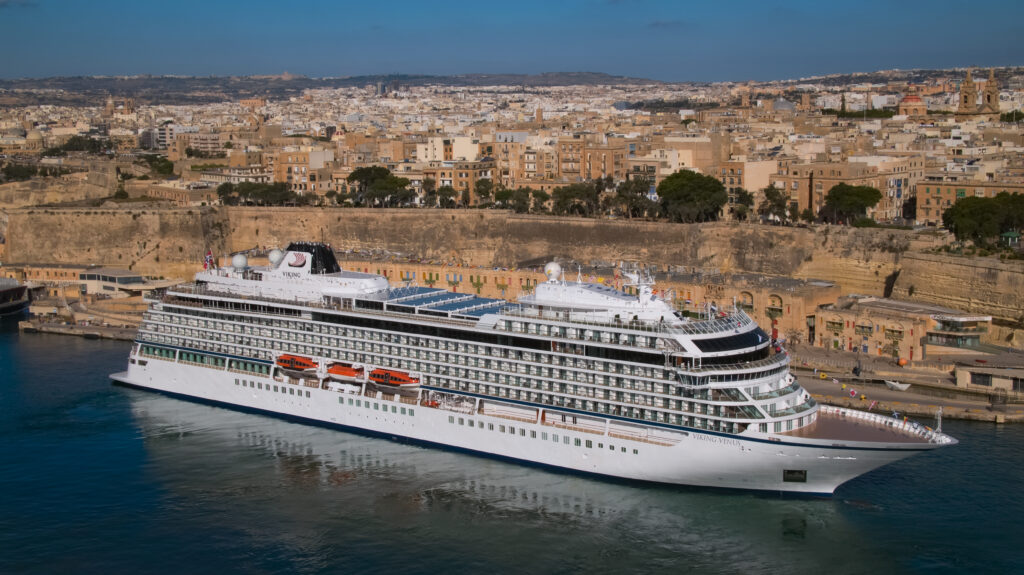 Viking Ocean
Viking Ocean is best known for being adult-only, culture and enrichment heavy and utterly consistent across their entire fleet, unlike Oceania and most of the others. All 15 Viking ships look the same outside, have the same layout and have the same Scandinavian décor inside. Once you’ve been on one you know exactly what the others will feel – and look – like.
Most of their ships carry 930, although some new ones are not just under 1,000. And they make a big point that they have no casino.
Viking is also known for and sees itself as the “thinking person’s cruise line”. There’s a resident historian on board who will be an expert on the region and ports, guest speakers, cooking classes in The Kitchen Table, and craft sessions.
Their fares usually bundle flights and transfer s, and they have many inclusions in the fare with one shore excursion in most ports being what makes them stand out versus the other lines in this category.
But fares also include gratuities, non-streaming Wi-Fi, beer, wine and soft drinks at lunch and dinner, dining in their two speciality restaurants (Manfredi’s Italian and The Chef’s Table), specialty coffees and teas, and access to the popular Nordic Spa.
Weaknesses?
I found the areas of weakness for Viking are the following.
First, I found and get the same comment all the time: “Gary, the ship was lovely – but it was too quiet.” That’s Viking doing what it was designed to do, it’s laid back, quite cerebral and the bars don’t usually get a late-night crowd looking to party. By ten in the evening, it can feel like most have retired to bed.
Second, bookings for both those two speciality restaurants and all excursions are released based on cabin grade, so on my last trip in an entry-level cabin I couldn’t get a decent dining time and the best excursions were sold out.
Third, I found on all trips that the included excursions were often just standard low-cost walking tours or panoramic bus drives and can miss the most iconic sights when they involve more costs , and so on that last trip in Alaska I had to buy paid-for excursions in almost all ports anyway to see the most-do things.
Fourth, their very long payment terms in some countries, like the USA where full fare is required up to a year in advance is off-putting. And they almost never have solo deals either.
Best For?
I believe Viking is best for couples who want calm, familiar, adult cruising where pretty much everything is organised for them, and the strong focus is on learning in depth about the places visited. If you want buzz, nightlife or variety, it will feel flat.
Time to talk about the new kid on the Small Ship Luxury block, the line owned by the Aponte family behind MSC Cruises. Explora Journeys.
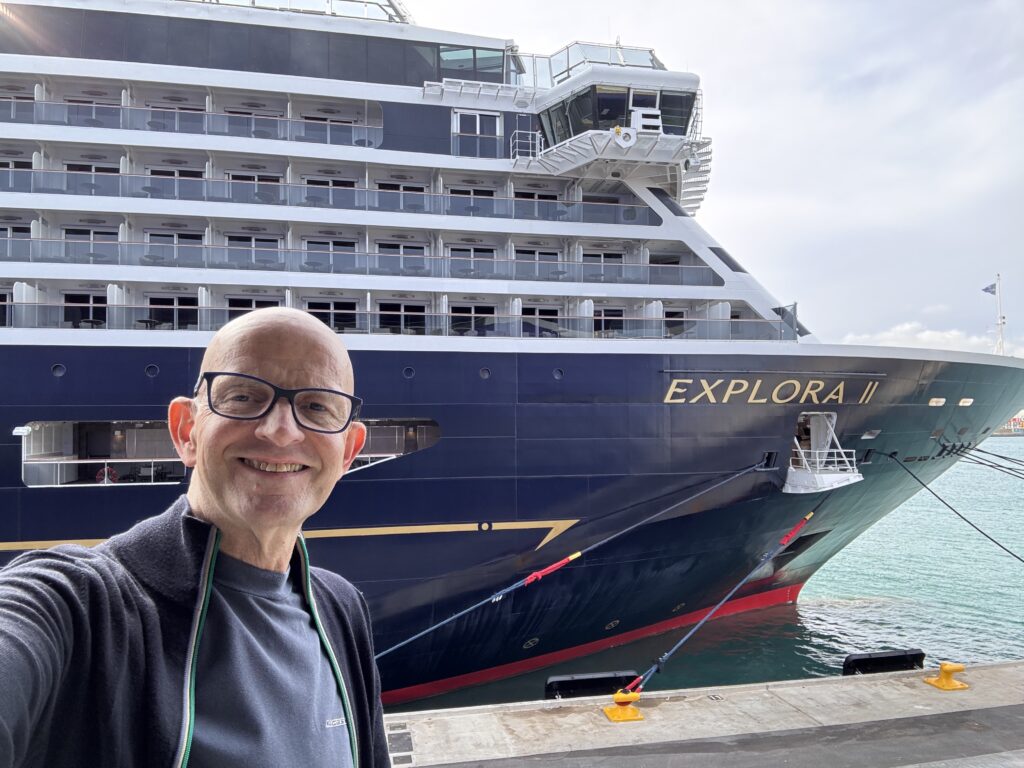 Explora Journeys
Explora Journeys is best known for being the sexy new entrant, offering purpose-built ships with European luxury boutique hotel at sea look and vibes.
Their 922-guest ships are modern, with lots of outdoor deck space, multiple pools and hot tubs dotted around, and stylish boutique hotel-like lounges, bars and restaurants. They have only balcony cabins, again very modern.
They are also known for being the only line in this category that is actively courting families. It’s the only one with Kids Clubs, which doubled in size from Explora II onwards, and they offer discounted Kids fares, and have a maximum occupancy of almost 400 more than the 922 at double occupancy, as many suites sleep up to four.
This catches many people out on sailing as many expect small ship luxury to be almost entirely adult. There is one adults-only plunge pool area, but the rest is very family friendly.
They are also known for having a much larger European passenger mix than the others, and although English is the main language they make much of their support of multiple European languages on board.
They are also known for being the most all-inclusive in this category, closer to ultra-luxury, with unlimited fine beverages, thermal spa access, some speciality dining, Wi-Fi, and gratuities included.
Explora wants to be known for dining and have wide choice. Unlike the others, they have no Main Dining Room and have the Mediterranean Yacht Club and Fil Rouge (French inspired) instead. The speciality restaurants are the included Sakura (Asian), Marble & Co (Steakhouse) and the added charge Anthology (Italian) and Chef’s Kitchen. In my experience the food is mixed but generally very good, and they have the hands down best buffet in the category in the Emporium Marketplace, which is closer to a Food Hall concept.
Weaknesses?
Because it’s new, some of the soft product is still being refined and the offer is still forming, I found variable service and mixed attention to detail.
Entertainment is weak, and the theatre is more a cabaret than theatre venue.
With a small fleet that will grow over the coming years, the itinerary choice is limited.
And for those seeking an adult environment, they need cruise avoiding school and key holiday periods, especially in the Mediterranean.
But if modern design, space, more inclusions, premium hotel feel matter to you, Explora stands out. And if you are looking for a small ship family friendly or multi-generational luxury cruising option, they are best in the category for this.
But what if something truly small and more adventurous appeals to you? Then this next line based on my experience could be the better choice. The privately owned Windstar.
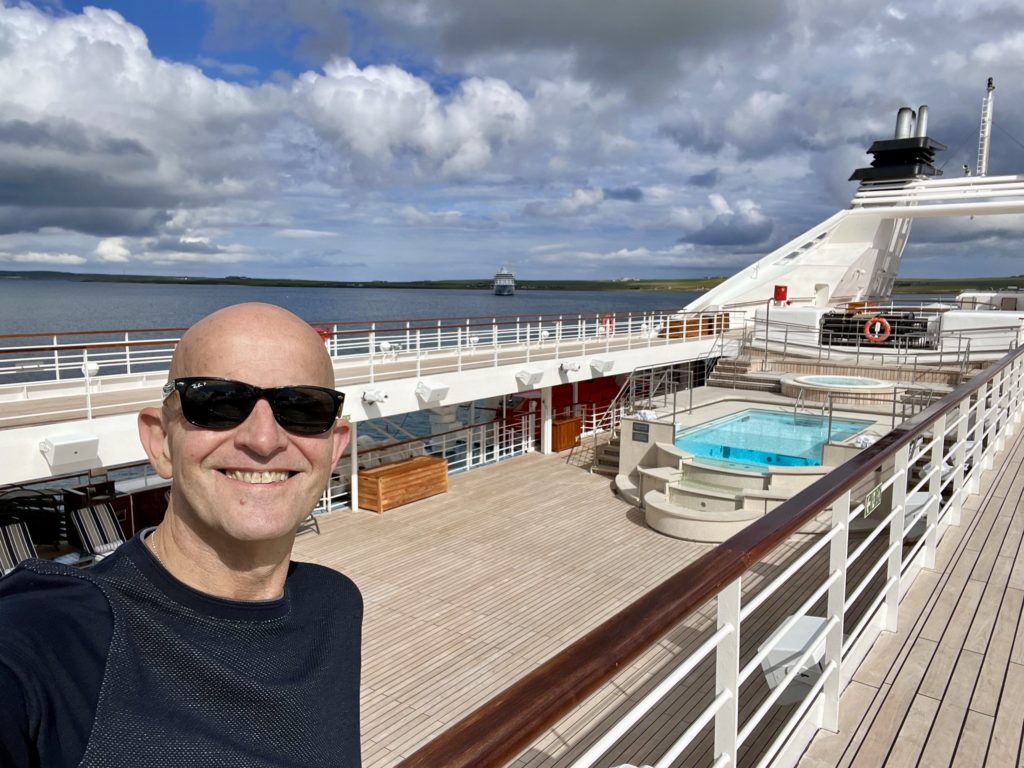 Windstar Cruises
Windstar is best known for offering the truest yacht experience in this category, as it has the smallest cruise ships in the category (ex-Seabourn 312-passenger ships and two 224-passenger new builds). It is also the only one with sailing ships that carry between 148 and 342.
Thanks to their fleet, they’re also known for having interesting, port intensive itineraries calling into ports the others cannot, and for their year-round French Polynesia sailings. They’ve been sailing there for almost 40 years, longer than any other line.
They are known for a very laid back and casual vibe .
Weaknesses?
While Windstar’s strength is that feeling of being on a yacht rather than a cruise ship, their weakness is that except for the two new builds, the ships are older, and so have few true balcony cabins, many cabins feel more premium than luxury. Also, the small ship means dining choice is limited to Amphora (Main Dining Room), the Veranda buffet for breakfast and dinner which becomes and Candles (steak and seafood grill) at night. Food is fine but does not stand out versus the others, though they do have a partnership with the James Beard Foundation
Another weakness versus the others, is that although fares are broadly the same , inclusions are the least of any in the category. Soft drinks and specialty coffees are included, but gratuities, Wi-Fi, alcohol and excursions are not.
Best For?
Windstar is best for people who dislike crowds and big or even moderate sized ship energy, who want to visit more unusual and less visited ports, like a casual cruising environment, don’t care about shows or flashy facilities, and want to try sailing ships and some of the smallest cruise ships sailing today.
But what about Azamara? Another of the small ship luxury lines?
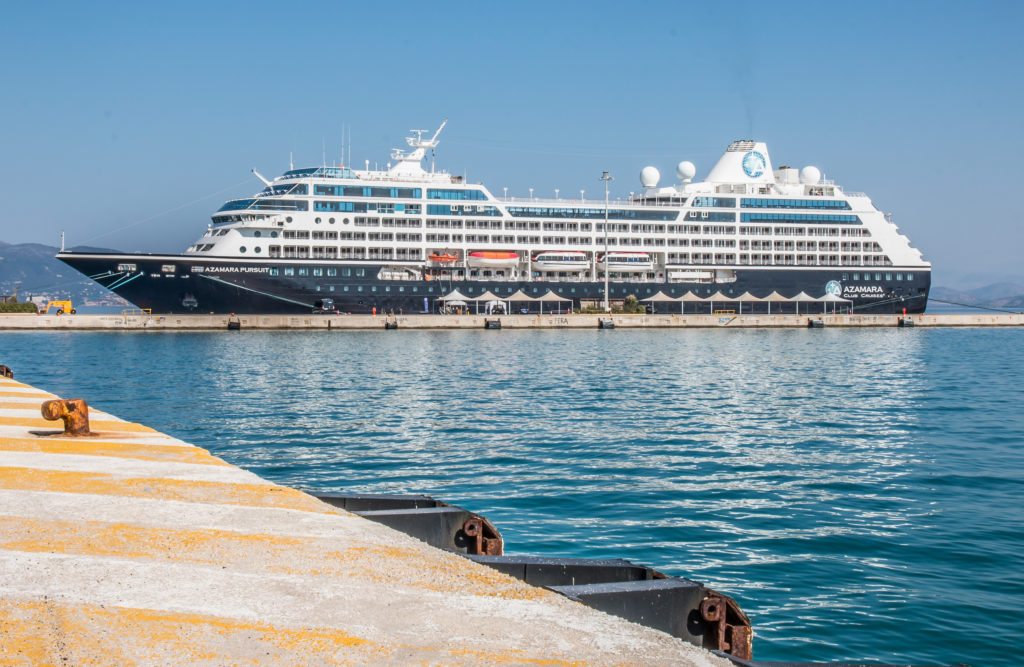 Azamara
Azamara, which was bought from Royal Caribbean by Sycamore Partners is best known for and positions itself as the best of these lines for destination immersion and intensive region itineraries. They focus on longer days in port with late departures and more overnights than the other lines.
They are also known for two signature events their regulars love: the AzAmazing evenings and White Nights. These are run once each on a cruise.
The AzAmazing evenings offer a local cultural immersion event just for their guests, which on my trips has included a local operatic performance in Italy and a special food and drink market in France. The White Nights is a deck buffet with stations hosted and served by the ship’s Senior Crew.
They are also well known for having a consistent, but ageing fleet, of four identical R-class ships carrying around 700 guests. This which lets them dock right in city centres and narrow waterways so while big ships are moored in working ports in places like Marseilles, I sailed right into the centre on Azamara Quest on my last trip with them.
Their ships also have the widest range of cabin types, from inside to suites, making them the most affordable entry options into small ship luxury.
Many seeking a more value small ship luxury experience also see as a plus their fare inclusions as it includes gratuities and a basic drinks selection (meaning you don’t necessarily need to buy a better drinks package), although Wi-Fi, premium drinks and the two specialty dining venues cost extra (except for suite guests).
Weaknesses?
While the strength of Azamara is that people love and are unlikely to complain about the ports and longer stays, they do sometimes have issues or complaints about their ships.
These are older vessels, cabins and bathrooms and especially showers are very small, entertainment and facilities are modest, and the food, while good, isn’t up at the level of Oceania or Explora.
Best For?
Azamara is best for travellers who want maximum time ashore and are happy to treat the ship as their transportation more rather than a major attraction. If you want glamour, big suites and lots of entertainment, it will disappoint.
But if none of these small ship luxury lines appeal to you based on this, why not read this article where I compare the ultra-luxury lines.
Discover more from Tips For Travellers
Subscribe to get the latest posts sent to your email.




Hi Gary.
What do you think about Crystal Cruises?